How U.S. gas prices and natural gas markets are reshaping business in 2026
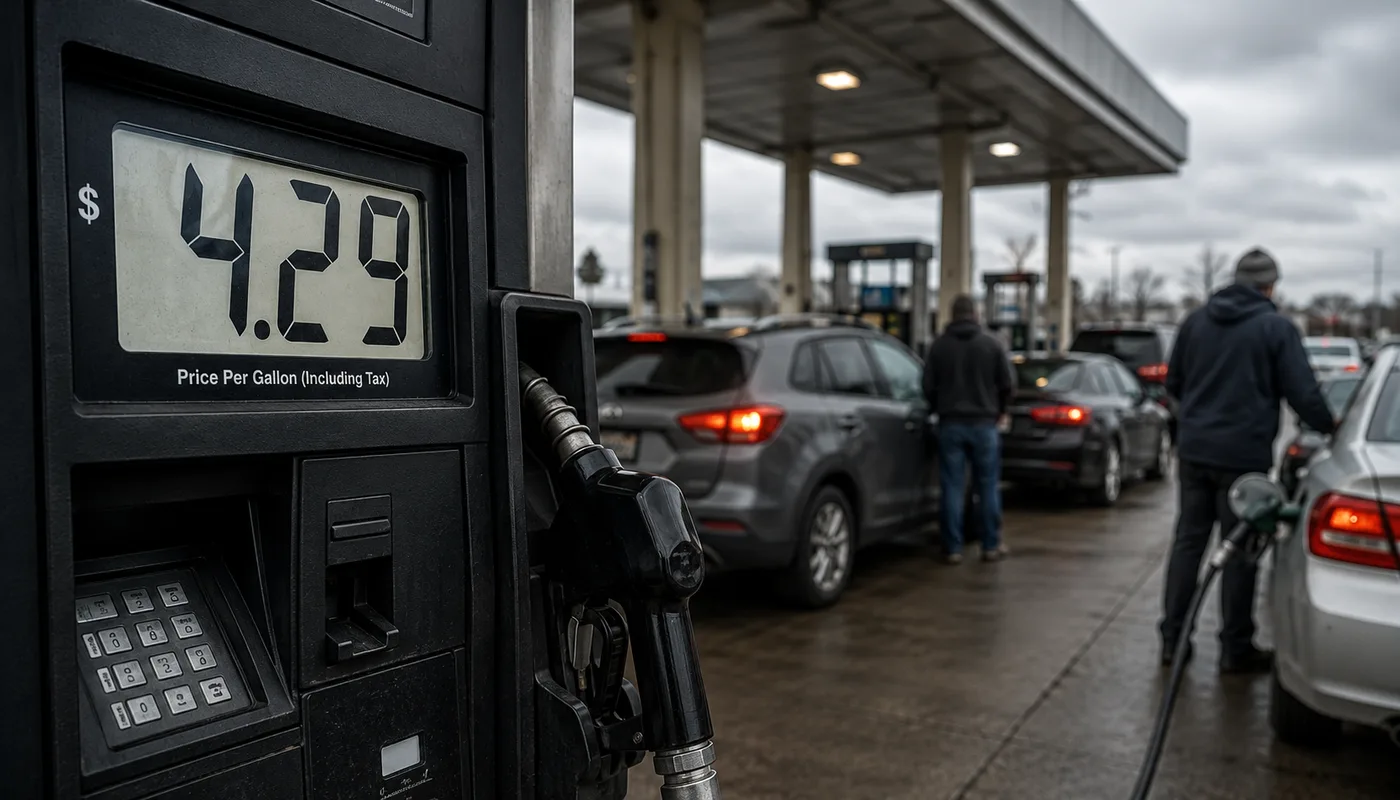
U.S. gas prices in 2026 are averaging over $4 per gallon and natural gas markets are driven by evolving export flows and domestic supply dynamics, squeezing consumers and reshaping energy and business decisions.
Key takeaways
- The national average gasoline price in the U.S. climbed above $4.00 per gallon in early 2026, the highest since 2022, largely due to global supply shocks. (https://www.wdbj7.com)
- GasBuddy data shows recent dips in pump prices may be temporary, with averages still elevated year‑over‑year. (Rigzone)
- U.S. natural gas futures have hovered around $3.15–$3.37 per million British thermal units (mmBtu), partly insulated from global LNG volatility. (Trading Economics)
- Retailers report consumer stress as fuel cost inflation alters spending patterns, with value‑centric chains gaining traction. (Reuters)
- The U.S. is advancing LNG export infrastructure, with projects like Delfin FLNG 1 poised to expand global gas trade. (Reuters)
Gas prices are high in 2026
Gas in the U.S. context means both the gasoline consumers buy at pumps and the natural gas traded as an energy commodity; both markets are in flux but for different reasons.
As of early 2026, the national average price for regular gasoline exceeded $4 per gallon — a significant surge from around $2.98 per gallon before the Iran war began in late February. (Reuters) This price is a real cost borne by motorists, not just a headline: it represents the largest monthly jump recorded by AAA in decades, reflecting tight global crude and product inventories. (https://www.wdbj7.com)
Yet price relief in early June has been uneven. Data from GasBuddy — a real‑time fuel price tracker — shows the median U.S. gas price near $4.09, down slightly from recent peaks but still well above a year ago. (Rigzone) Consumer sentiment surveys indicate Americans expect fuel costs to remain elevated, with broad concern about continued inflationary pressure. (Reuters)
Why business and consumers feel the squeeze
Higher pump prices materially affect household budgets and shape broader economic behavior.
When gasoline costs jump, consumers adjust not just how often they refuel, but how and where they spend outside the fuel aisle. Reuters reporting on retail behavior shows U.S. shoppers tightening belts, prioritizing essentials, and gravitating toward discount and wholesale clubs that offer lower fuel prices. (Reuters)
This shift is striking for the broader consumer economy. Retailers dependent on discretionary purchases — from apparel to dining — face a “stress test” as fuel‑driven cost pressures chip away at disposable income. Chains that combine value propositions with fuel savings, such as Costco or Sam’s Club, have seen relative resilience; others struggle. (Reuters)
From a business perspective, the cost of gasoline ripples through logistics, transportation, and pricing strategies. Higher fuel costs can squeeze margins for freight‑intensive sectors or compel pricing adjustments that feed further into inflation measures.
Natural gas: a different market, similar pressures
Natural gas markets in the U.S. are influenced more by domestic supply, weather, and export flows than by crude shocks that dominate gasoline prices.
Natural gas is traded in units of mmBtu and is a primary fuel for electricity generation, heating, and industrial processes. U.S. natural gas futures have been relatively stable in 2026, trading near $3.15–$3.37/mmBtu, with price moves driven by supply‑demand dynamics rather than global oil shocks. (Trading Economics)
The relative stability reflects a combination of robust domestic production and ample storage levels in many regions. Seasonal maintenance at LNG export terminals has reduced feedgas flows recently, which has tempered upward pressure. (Reuters) Meanwhile, cooling demand for summer power generation injects some upward influence into price expectations. (Trading Economics)
LNG exports are shifting long‑term gas dynamics
Liquefied natural gas (LNG) export infrastructure is expanding and reshaping where and how U.S. gas competes globally.
On June 3, 2026, Delfin Midstream approved the first U.S. floating LNG export facility (Delfin FLNG 1), with capacity of 4.4 million tonnes annually — the largest such project worldwide. (Reuters) This milestone underscores the U.S. pivot from a predominantly domestic natural gas market to a global exporter of LNG, linking U.S. supply more directly to demand in Europe and Asia.
LNG export growth adds complexity to U.S. gas pricing. As export volumes rise, domestic production must balance increasing external demand with storage and power generation requirements. This exported demand can uphold price levels even when domestic consumption weakens seasonally.
A simple framework for understanding 2026 gas trends
Think of the U.S. gas market in 2026 across two axes: consumer impact (gasoline) and energy infrastructure (natural gas).
- Consumer pump side (gasoline): Price levels tied to crude oil markets, refining capacity, and inventories drive short‑term consumer pain — a direct input to retail sales patterns and transportation costs.
- Energy commodity side (natural gas): Prices are shaped by domestic production, weather, and export feedgas flows, which affect power generation costs and longer‑term investment calculus.
This dual perspective helps explain why gasoline and natural gas can appear disconnected: one is a refined product sensitive to global crude flows, the other a domestically traded commodity with growing international links via LNG.
What’s changed in 2026
2026 has been marked by elevated gasoline costs tied to geopolitical disruptions, while natural gas pricing shows resilience with nuanced export‑driven pressures.
Gasoline inventories have fallen, reflecting strong seasonal demand and export interest for refined products, which supports higher pump prices. Meanwhile, U.S. crude production remains near record levels but does not immunize domestic fuel prices from global price signals. (Reuters)
Natural gas markets have seen demand rebalancing as LNG export flows fluctuate and power generation demand evolves with weather. Futures markets reflect a balance of above‑average storage and incremental demand, leading to price ranges that are historically moderate but poised for volatility.
FAQ
Why are U.S. gas prices high in 2026?
U.S. gas prices are high in 2026 because global oil market disruptions — especially the Iran war and low gasoline inventories — have pushed the national average above $4 per gallon, even though U.S. domestic crude production remains strong.
How do natural gas markets differ from gasoline pricing?
Natural gas pricing in the U.S. remains relatively stable around ~$3.10–$3.40/mmBtu due to ample domestic supply and storage, while gasoline prices respond more sensitively to crude oil market shocks and refinery inventories.
Sources
- Reuters: "Delfin Midstream greenlights first US floating LNG export project" (2026‑06‑03)
- Reuters: "Rising gas prices hitting US household finances and more pain is expected" (2026‑03‑20)
- Reuters: "Natural gas futures ease as LNG export flows hit four‑month low" (2026‑06‑02)
- Rigzone: "GasBuddy Warns USA Gas Price Relief May be Short Lived" (2026‑06‑03)
- Associated Press: "Gas prices soar past $4 on average for gallon of regular" (2026‑03‑31)