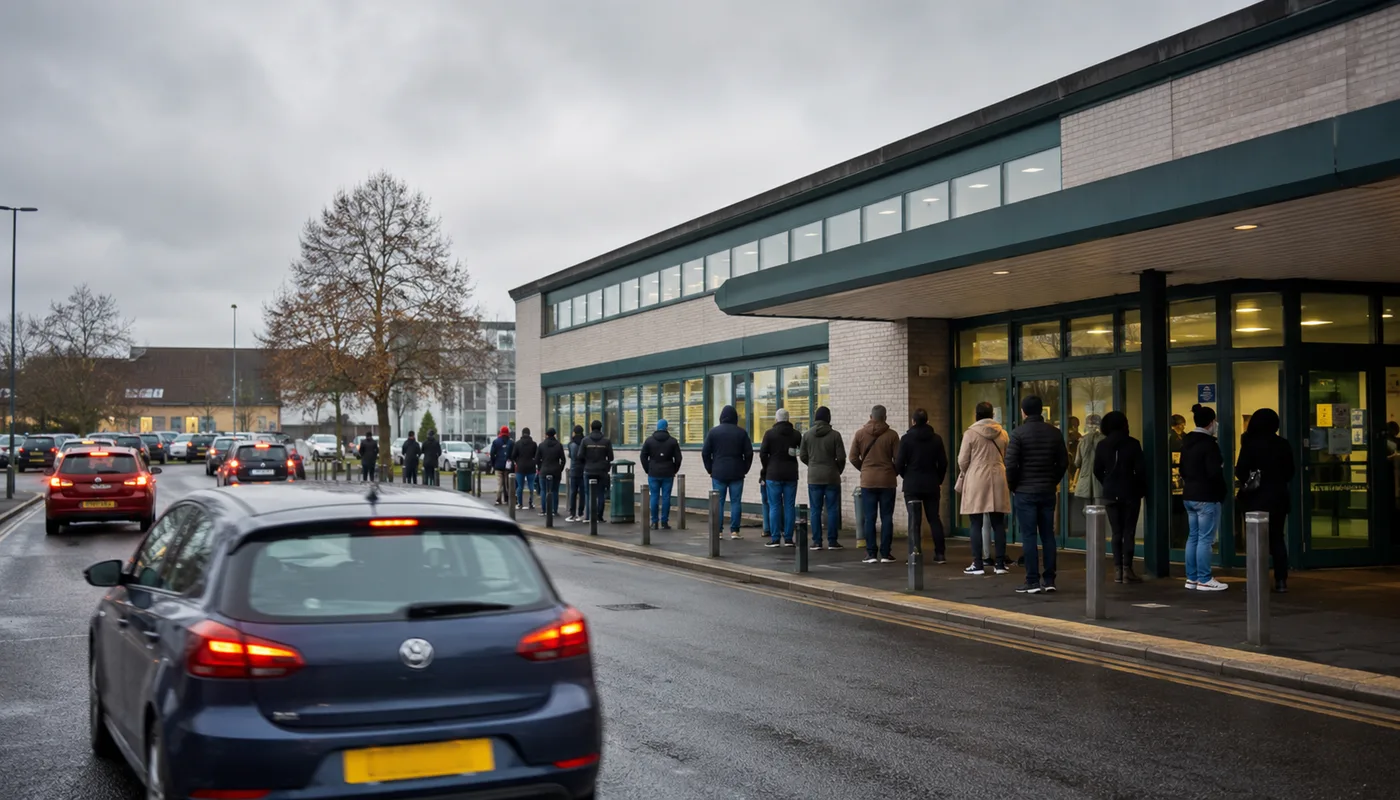
DVLA in the UK: reform debates, campaigns and growing pains
The Driver and Vehicle Licensing Agency (DVLA) is the UK executive agency that issues driving licences, registers vehicles and enforces vehicle tax and compliance, now in the spotlight over reform, a national tax campaign and operational frustrations in 2026.
Key takeaways
- The DVLA is the UK agency responsible for licences, registrations and vehicle tax enforcement, maintaining tens of millions of records. (GOV.UK)
- In April 2026, a House of Commons debate was opened on comprehensive DVLA reform, focusing on modernisation and service quality. (House of Commons Library)
- A national Vehicle Excise Duty (VED) enforcement campaign launched in January 2026 underscores ongoing tax compliance pressures. (GOV.UK)
- DVLA issued 12.5 million driving licences and processed 99.4 million transactions in 2024–25, with 84% via digital channels. (GOV.UK)
- Ongoing public frustration over medical licensing delays, online service glitches and number plate rules highlight user experience limits.
What is the DVLA?
The Driver and Vehicle Licensing Agency (DVLA) is the UK executive agency that manages driver and vehicle records and enforces motoring compliance. It maintains records for about 53 million drivers and 47 million vehicles across Great Britain, issues photocard licences, vehicle registration certificates and enforces Vehicle Excise Duty (VED). (GOV.UK)
The DVLA’s work underpins everyday motoring law enforcement and road safety, from ensuring drivers hold valid licences to tracking taxed vehicles. It is part of the Department for Transport’s network of executive agencies, with a major digital footprint—handling almost all core transactions online. (GOV.UK)
Why is the DVLA under parliamentary scrutiny in 2026?
In April 2026, MPs opened a general debate in the House of Commons on reforming the DVLA to address ongoing performance and service delivery challenges. (House of Commons Library)
The reform debate isn’t hypothetical: it follows years of internal reviews and customer complaints about digital inefficiencies, slow medical licence decisions, and legacy systems. A previous government review highlighted that 83 % of DVLA transactions occur online—high by public service standards—but also identified a need for deeper digital transformation and better support for complex cases. (GOV.UK)
Opposition and cross-party voices in Parliament are pushing for a clearer vision and measurable targets to modernise DVLA services, including accelerated tech upgrades and customer experience improvements. The discourse reflects broader government priorities around public service digitalisation and accountability.
How is the DVLA performing operationally?
Official data for the 2024–25 financial year shows that the DVLA dealt with nearly 99.4 million customer transactions, with 84 % processed through digital channels. (GOV.UK)
It collected £8.4 billion in Vehicle Excise Duty (VED) and raised over £274 million from personalised vehicle registrations. (GOV.UK)
The agency also issued approximately 12.5 million driving licences and handled 17.9 million V5C vehicle logbooks during that period. (GOV.UK)
These figures suggest robust core operations. But the same annual report notes that over 830 000 medical licensing decisions were made—up 15 % year‑on‑year—highlighting workload pressure in more complex regulatory areas. (GOV.UK)
What are the biggest public controversies?
Despite the numbers, the DVLA has attracted frustration online and in the press for inconsistent service and delays. Recent anecdotal reports highlight prolonged waits for medical licence reinstatements, confusing licence statuses on online portals and record errors that have left some motorists unable to legally drive for weeks or months. (The Guardian)
These issues tend to cluster around more nuanced or exception‑based cases—like medical reviews or overseas licence exchanges—where digital solutions are still underdeveloped. They reinforce why reform advocates emphasise deeper digital transformation, not just surface upgrades.
A popular point of irritation is data sharing: private parking firms and other organisations access DVLA vehicle keeper details for enforcement, a practice some motorists view as overreaching and poorly regulated, although it remains legal under specific UK data provisions. (Reddit)
What new campaigns and rule changes should UK drivers know?
In early 2026 the DVLA launched a national public compliance campaign, “Nobody Wins,” aimed at reducing untaxed vehicles. Although 98.7 % of motorists tax their vehicles on time, more than 150 000 untaxed vehicles were clamped in 2025, prompting the campaign. (GOV.UK)
The message is simple: taxing vehicles online is quick and failure to comply can result in enforcement action. The campaign ran across outdoor, audio and online channels into March 2026 with character‑driven creative to boost awareness. (GOV.UK)
Additionally, DVLA‑related rules on number plates continue to evolve in 2026. UK law requires number plates to meet specific standards—solid black lettering, British Standard markings and registered supplier details—or drivers risk fines or MOT failures. (Autotrader)
Drivers should also stay aware of periodic updates to licence medical requirements, particularly for commercial licences where continuous glucose monitors (CGM) use for diabetes monitoring has been incorporated into DVLA policy for Group 2 drivers. (Note: this change was from 2025; relevant to current context.) (Diabetes UK)
FAQ
What is the DVLA?
The Driver and Vehicle Licensing Agency (DVLA) is the UK executive agency responsible for issuing driving licences, vehicle registration, recording driver endorsements and enforcing Vehicle Excise Duty.
Why is the DVLA facing reform debate in Parliament?
Parliamentary debate in April 2026 arose from concerns over digital services, operational delays in complex licensing cases and the need for clearer long‑term strategy and performance targets.
What recent DVLA rule changes affect UK drivers?
Recent developments include a 2026 national campaign to reduce untaxed vehicles, reinforced number plate standards, and evolving medical and licence rules that drivers should review regularly.
Sources
- About us – Driver and Vehicle Licensing Agency – GOV.UK (UK Government)
- DVLA annual report and accounts 2024 to 2025 – GOV.UK (Driver and Vehicle Licensing Agency)
- Reform of the Drivers and Vehicles Licensing Agency – UK House of Commons Library
- DVLA warns ‘nobody wins’ as new campaign targets untaxed vehicles – GOV.UK
- Displaying number plates: UK rules for 2026 – AutoTrader UK