Southampton riots over Henry Nowak murder expose fault lines in UK policing
Violent clashes known as the Southampton riots broke out on 2–3 June 2026 after protests over the police handling of the stabbing death of 18‑year‑old Henry Nowak and quickly became a flashpoint in national debates over policing and political rhetoric.
Key takeaways
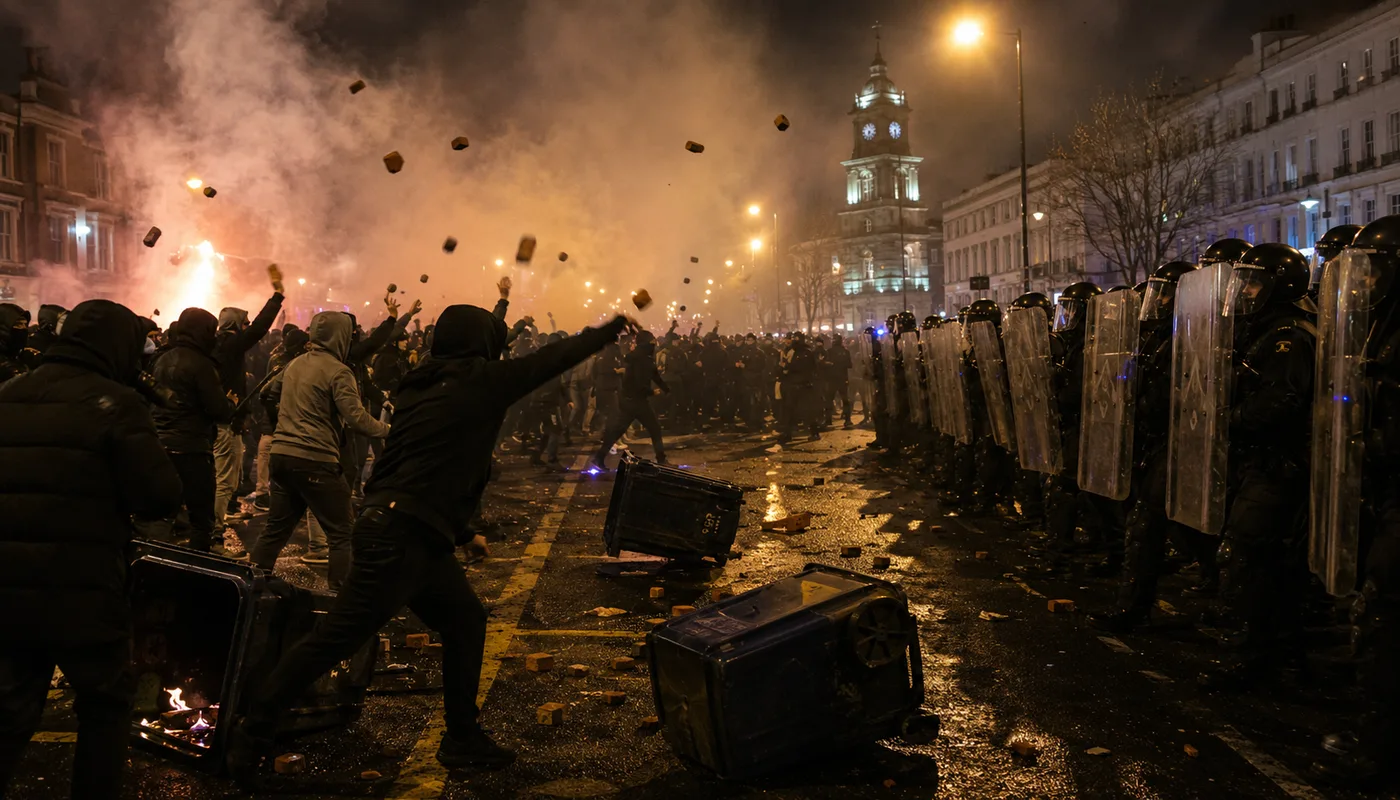
- Protest turned violent: Hundreds protesting in Southampton over the murder of student Henry Nowak clashed with police, leading to bricks, bottles and bins thrown at officers. (ITVX)
- Injuries and arrests: At least 11 police officers and one police dog were injured, and two protesters were arrested during the unrest. (ITVX)
- Political fallout: Prime Minister Keir Starmer and other government figures condemned the violence while also raising questions about police conduct in the Nowak case. (The Guardian)
- Underlying grievance: Protesters were fueled by bodycam footage showing Nowak handcuffed as he lay dying from stab wounds, intensifying long‑running tensions over policing and race. (ITVX)
- Independent review: The Independent Office for Police Conduct (IOPC) is investigating the police response to the incident, a rare move in cases of public disorder scrutiny. (ITVX)
What are the Southampton riots?
The Southampton riots describe the outbreak of violent clashes between protesters and police in Southampton, England, on the evening of 2 June 2026, sparked by outrage at how police handled the stabbing death of 18‑year‑old Henry Nowak and amplified by political rhetoric from prominent figures. (ITVX)
What started as a protest outside Southampton Central Police Station escalated into pitched battles in the Portswood and St Denys areas, with demonstrators throwing bricks, bottles, wheelie bins and flares at riot police. (ITVX)
This was not a spontaneous protest over general grievances; it was fuelled by visceral public reaction to released body‑worn camera footage that appeared to show a dying Nowak being handcuffed by officers despite repeated pleas that he had been stabbed. (ITVX) The raid turned into widespread disorder that left dozens of law enforcement resources diverted and residents shaken.
What triggered the violence?
The proximate trigger was the release of bodycam footage from December 2025 showing Nowak being handcuffed by police as he lay dying from a stabbing. (ITVX) Nowak was killed on 3 December 2025 by 23‑year‑old Vickrum Digwa, who falsely claimed to police that he was the victim of a racist attack. (ITVX) Digwa was later sentenced to life with a minimum of 21 years in prison for murder. (ITVX)
The footage, published in early June 2026 after the sentencing, ignited widespread anger. Critics argued that treating a gravely injured victim as a suspect—as captured on video—reflected a tainted policing culture. (ITVX)
This grievance quickly metastasised into broader claims of bias and unequal treatment under the law, boosted by statements from far‑right figures like Tommy Robinson and Nigel Farage who framed the case as evidence of “two‑tier policing”. (ITVX)
How did the protests play out on the ground?
The unrest began peacefully with several hundred people gathering outside Southampton’s central police station, chanting “Henry, Henry” and demanding accountability. (ITVX) But as the crowd moved across the city to residential areas near where the murder occurred, tensions escalated.
Hampshire police deployed riot shields, vans and a helicopter in response. Protesters hurled missiles—chairs, bricks, flares and bottles—forcing police to retreat and hold new lines. (ITVX) A police dog and at least 11 officers were recorded as injured while trying to maintain order. (ITVX)
Two individuals were arrested during the unrest, one for assaulting an officer and another for possession of a weapon, though authorities warned more arrests are likely as investigations continue. (Sky News)
Local residents described the scene as “terrifying” as property damage occurred and police resources were spread thinly across affected neighbourhoods. (Reddit)
How have officials and community leaders reacted?
National political leaders largely condemned the violence while acknowledging the public’s frustration.
- Prime Minister Keir Starmer called the riots a “disgraceful” response to tragedy but also said serious questions about policing must be addressed. (The Guardian)
- Home Secretary Shabana Mahmood described the scenes as “completely unacceptable” and urged that Nowak’s death not be used to fuel hatred. (ITVX)
- Policing minister Sarah Jones acknowledged public anger but stressed that justice must unfold through established processes. (ITVX)
- Hampshire Police Chief Constable Alexis Boon pledged to pursue those responsible for disorder and defended officers’ professionalism. (ITVX)
- Nowak’s father, Mark Nowak, urged calm, warning against exploiting his son’s death for wider conflict. (ITVX)
Beyond law enforcement and government lines, political figures on the far right amplified grievances, framing the case as evidence of systemic bias in police culture—a characterization rejected by many mainstream leaders. (ITVX)
Why this matters beyond Southampton
The Southampton riots matter because they expose a fraying consensus on policing standards and public trust in law enforcement—a recurring theme in the UK and other democracies.
First, the case intersects with sensitive debates on police decision‑making under stress and whether officers unduly prioritise political considerations over evidence. (ITVX)
Second, the protests illustrate how moral outrage can be accelerated by political figures, turning local incidents into national flashpoints. The presence and rhetoric of polarising commentators helped shift public anger toward broader cultural grievances. (ITVX)
Third, the deal with this unrest will test Britain’s public order laws, which balance the right to protest against the need to prevent disorder. Critics have historically argued that heavy‑handed police responses can worsen tensions, yet lax enforcement may embolden violence. This incident underscores the narrow margin law enforcement must navigate. (University of Southampton)
What happens next?
The Independent Office for Police Conduct (IOPC) continues its independent investigation into how police responded to the Nowak incident, including decisions made on that fatal night. (ITVX) The National Police Chiefs’ Council has also pledged to review anti‑racism guidance that some have blamed for police actions. (ITVX)
More criminal charges related to the unrest are expected as authorities sift through video and witness testimony. (Sky News)
Government officials have emphasised that accountability must operate within legal norms rather than through mob action, a point of friction that will shape how future public demonstrations are policed and judged.
FAQ
What triggered the Southampton riots?
The riots erupted after a protest over the police handling of the murder of 18‑year‑old Henry Nowak escalated into violent clashes between protesters and police. (ITVX)
How many police were injured during the unrest?
At least 11 police officers and one police dog were injured during clashes with protesters in Southampton. (ITVX)
Are authorities investigating the incident?
Yes; the Independent Office for Police Conduct is conducting an independent investigation into police actions related to the Nowak murder and subsequent unrest. (ITVX)
Sources
- Protesters accused of 'hijacking' Henry Nowak tragedy after violent clash with police – ITV News
- 11 police officers injured in Southampton during violent protests – ITV News Meridian
- UK government condemns violence at protest over teen's stabbing death – AP News
- Starmer condemns riots in Southampton after Henry Nowak murder – The Guardian