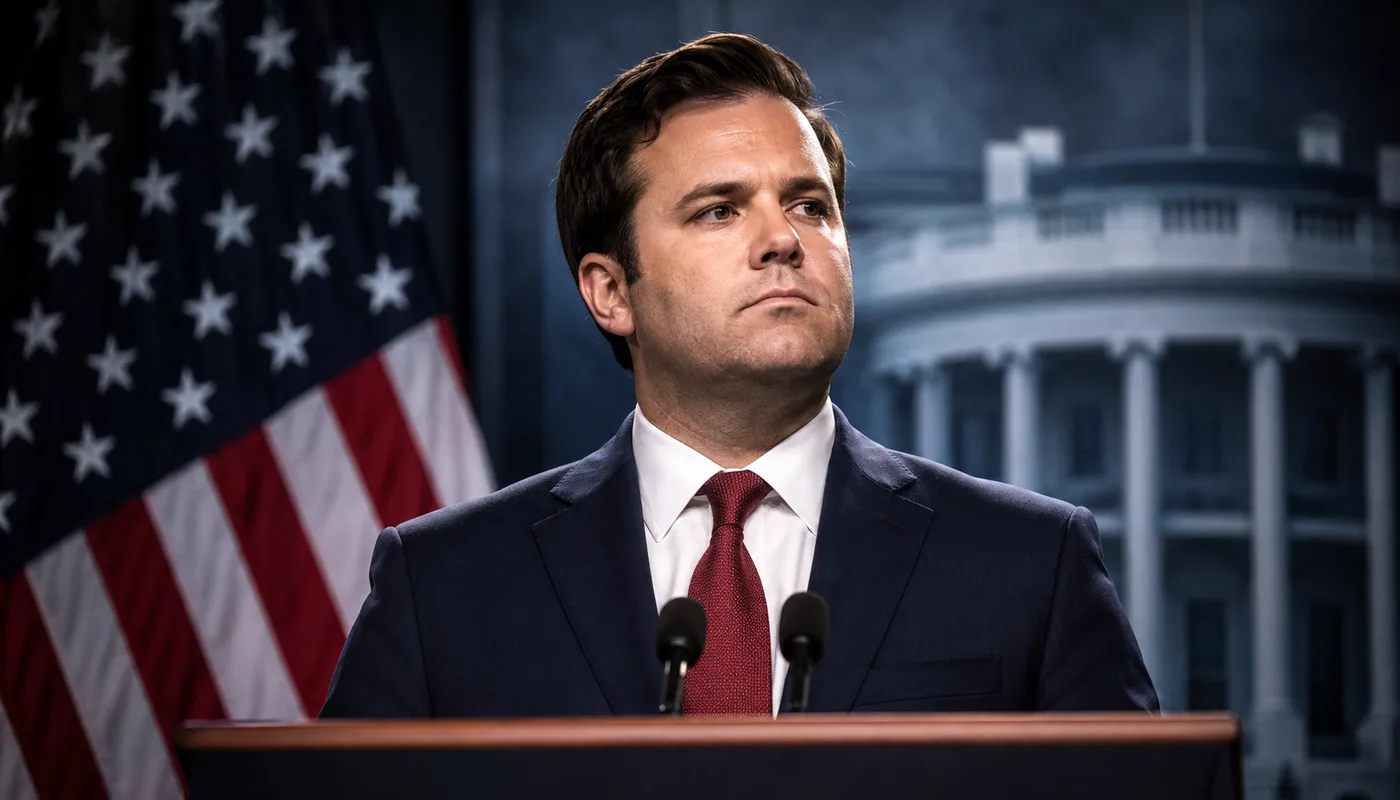
Bill Pulte: Trump’s Unconventional Pick for Acting Director of National Intelligence
Bill Pulte, the Federal Housing Finance Agency chief with no national security experience, was appointed acting Director of National Intelligence in June 2026, a move that has drawn sharp bipartisan concern over qualifications and politicization of U.S. intelligence. (Investing.com)
Key takeaways
- Unconventional appointment: President Donald Trump named Bill Pulte, the head of the Federal Housing Finance Agency (FHFA), as acting Director of National Intelligence (DNI), a role traditionally held by seasoned national security professionals. (Investing.com)
- No intelligence experience: Pulte has no prior military, intelligence, or diplomatic experience, prompting criticism that the choice undermines the expertise expected in overseeing the United States intelligence community. (Forbes)
- Temporary tenure sans confirmation: As acting DNI, Pulte can serve up to 210 days without Senate confirmation, but any permanent appointment would require approval by the Senate. (Reuters)
- Polarized reaction: Both Republican and Democratic lawmakers have criticized the move, arguing national security leadership should be professional and nonpartisan. (Forbes)
- Broader pattern: Pulte’s earlier tenure at FHFA involved controversial politically charged investigations and proposals, contributing to fears that his leadership style could carry into the intelligence role. (Forbes)
The surprise of Bill Pulte’s intelligence leadership
Bill Pulte’s elevation from a housing finance regulator to acting Director of National Intelligence is one of the most unexpected personnel moves of 2026 in U.S. government. As the director of the Federal Housing Finance Agency, Pulte oversaw government-sponsored mortgage entities and regulatory policy. (Wikipedia) Yet on June 2, 2026, President Donald Trump announced that Pulte would replace Tulsi Gabbard as acting DNI, citing his management of sensitive fiscal matters despite having no formal background in intelligence or national defense. (Investing.com)
The Director of National Intelligence leads coordination across the U.S. intelligence community — including the Central Intelligence Agency (CIA) and the National Security Agency (NSA) — and is responsible for synthesizing global intelligence for the president and lawmakers. The role was established after the September 11, 2001 attacks to ensure centralized oversight. Pulte’s shift from housing finance to this top national security role is unusual and has generated significant scrutiny. (South China Morning Post)
What changed: Pulte’s new role and the law
The Director of National Intelligence (DNI) oversees 18 U.S. intelligence agencies and produces threat assessments on foreign adversaries. The position routinely influences budget priorities and long-term strategic planning. Historically, DNIs have been experienced intelligence officials, military leaders, or senior national security professionals. Pulte’s appointment departs from that norm. (Investing.com)
Under U.S. law, the DNI must normally be confirmed by the Senate. However, federal vacancy rules permit acting service for up to 210 days while the president considers a permanent nominee. This bypasses immediate confirmation, which would expose an appointee’s qualifications to Senate scrutiny. Pulte’s acting status allows him to lead without initial legislative approval. (Reuters)
Bill Pulte’s background: from housing finance to national security
Bill Pulte is an American businessman and government official who became FHFA director in March 2025. He was confirmed by the Senate in a 56–43 vote to lead the housing finance regulator that oversees Fannie Mae and Freddie Mac, two government-backed entities central to the U.S. mortgage market. (Wikipedia)
Before his public service, Pulte was involved in private equity and nonprofit work, and he is heir to the PulteGroup homebuilding legacy. His tenure at FHFA was marked by unorthodox policy proposals — such as advocating 50-year mortgages — and politically charged actions, including pushing the Department of Justice to probe Democratic officials for alleged mortgage fraud, a pattern that drew bipartisan criticism. (Forbes)
Those episodes contributed to a perception among critics that Pulte leverages government power in highly politicized ways. For example, Forbes noted Pulte led probes into Trump political foes, a practice viewed by opponents as using regulatory authority for partisan ends. (Forbes)
Why the appointment is controversial
The core controversy stems from Pulte’s lack of intelligence credentials. Senior lawmakers from both parties have voiced alarm that he has “no time in the military, no time in Congress, [and] no time in the diplomatic corps,” as Senate Intelligence Committee members pointed out. (The Washington Post)
Even some Republicans have questioned the wisdom of the pick. Senate Majority Leader John Thune said the U.S. “doesn’t need a weaponized DNI; we need professionals there,” underscoring that national security leadership ideally rests on expertise rather than loyalty. (Forbes)
Democrats have been more blunt: Senator Chuck Schumer described Pulte as a “partisan thug,” while other critics argue his record at FHFA shows a willingness to entangle government authority with political objectives. (Reuters)
Another line of critique is structural: the intelligence community deals with foreign encryption, espionage, and emerging threats like cyber warfare. Observers warn that placing a political loyalist without relevant qualifications at the helm could undermine confidence in U.S. intelligence assessments. (South China Morning Post)
Table: Traditional vs. Pulte’s Profile for Director of National Intelligence
| Attribute | Traditional DNI Profile | Bill Pulte’s Profile |
|---|---|---|
| National Security Experience | Extensive (military, intelligence) | None documented |
| Intelligence Community Background | Worked within CIA/NSA or similar | FHFA leadership |
| Senate Confirmation | Required for permanent role | Bypassed initially as acting DNI |
| Partisan Engagement | Typically restrained | History of politically charged actions |
| Policy Expertise | Foreign policy/defense | Housing finance and mortgage markets |
Political calculation and midterm timing
The timing of Pulte’s appointment also aligns with a politically charged election year. By serving as acting DNI through the midterms without immediate confirmation, Pulte is positioned to influence intelligence outputs during a period of active geopolitical conflicts — including tensions with Iran, Russia, and China — and high-stakes domestic politics. (Investing.com)
Supporters argue that Pulte’s proven loyalty and managerial confidence justify the choice in an era many of them frame as needing firm leadership. However, that view intensifies concerns among critics that loyalty to a political agenda might trump independent, objective intelligence assessment. The debate reflects broader tensions in U.S. governance about professional norms versus partisan appointments. (Forbes)
What happens next
As acting DNI, Pulte will oversee daily intelligence briefings and coordinate U.S. intelligence agencies, with the power to influence analytical priorities and resource allocations. If Trump permanently nominates him, the Senate — particularly the narrowly divided chamber — will face pressure to assess his qualifications in a confirmation process that could become a flashpoint for broader debates about the politicization of government institutions. (Reuters)
The appointment also places the spotlight back on Pulte’s record at FHFA, where investigations, policy shifts, and internal personnel decisions have already prompted legal challenges and congressional oversight inquiries. (Forbes)
FAQ
Who is Bill Pulte?
Bill Pulte is the current director of the Federal Housing Finance Agency who was appointed acting Director of National Intelligence in June 2026, despite having no prior experience in intelligence or defense. (Wikipedia)
Why is Bill Pulte’s appointment controversial?
The appointment is controversial because Pulte lacks a background in national security, and critics argue his tenure at FHFA shows a pattern of politicized use of government authority. (Forbes)
Does Bill Pulte require Senate confirmation to lead U.S. intelligence?
As acting DNI, Pulte can serve up to 210 days without Senate confirmation, but any permanent role would require Senate approval. (Reuters)
Sources
- Reuters, “Trump appoints ally Bill Pulte as acting US intelligence director,” 2026‑06‑02.
- Associated Press, “Trump taps housing regulator Pulte to be acting director of national intelligence,” 2026‑06‑02.
- Wikipedia, “Bill Pulte.”
- Forbes, “Trump’s Pulte Pick For Intelligence Chief Blasted Far And Wide,” 2026‑06‑02.