TrumpRx: U.S. Government’s Prescription Drug Pricing Platform Explained
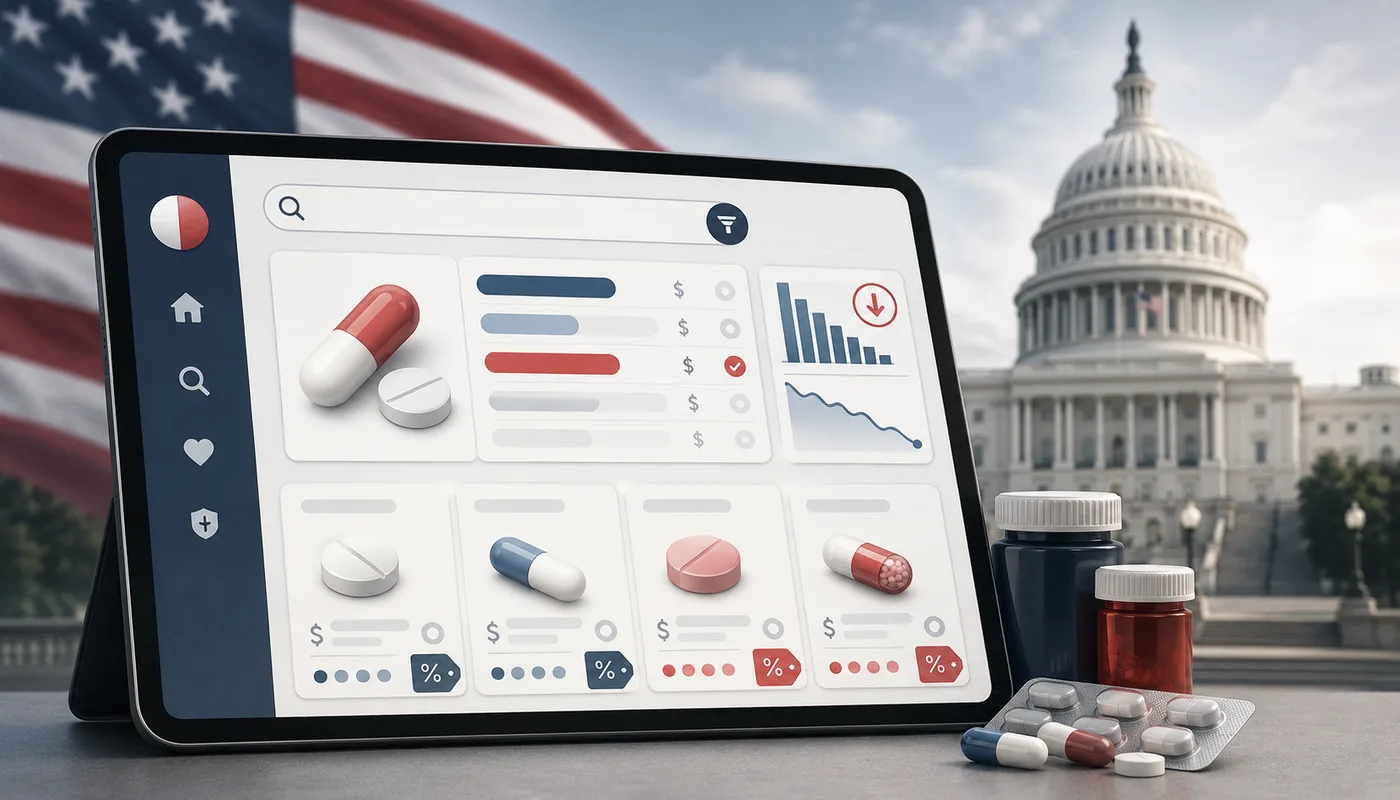
TrumpRx is the U.S. government’s direct‑to‑consumer prescription drug pricing platform that links cash‑pay patients to discounted drugs using negotiated most‑favored‑nation pricing and an expanding catalogue of generics.
Key takeaways
- Platform purpose: TrumpRx is a federal government prescription drug platform designed to show Americans lower negotiated drug prices, directing cash‑pay consumers to discounted options without insurance intermediaries. (American Hospital Association)
- Generics expansion: The Trump administration recently added more than 600 generic medications to the TrumpRx catalogue, boosting availability of lower‑cost options for common drugs. (Endpoints News)
- Most‑Favored‑Nation pricing: TrumpRx uses a “most‑favored‑nation” (MFN) framework that benchmarks U.S. list prices against the lowest prices paid in comparable countries. (KFF)
- Limited insured benefit: Many listed drugs already have cheaper alternatives via existing programs or insurance negotiation, meaning TrumpRx’s discounts often matter most for uninsured or cash‑pay patients. (TechTarget)
- Policy friction: Experts warn that TrumpRx’s early impact is constrained by a small initial drug list and by the complexity of integrating prices with insurance coverage. (TechTarget)
What is TrumpRx and why it matters now
TrumpRx is a federally backed prescription drug pricing platform launched in February 2026 by the administration of President Donald Trump to help Americans find lower‑priced prescription medications outside of traditional insurance pathways. (Wikipedia) The core idea is simple: cut out intermediaries and negotiate drug prices based on the lowest costs paid internationally — a “most‑favored‑nation” (MFN) model. (KFF) At a time when prescription drug affordability is a central political issue, TrumpRx’s rapid expansion to include hundreds of generic drugs marks a rare, visible federal intervention in U.S. drug pricing. (Endpoints News)
The platform doesn’t sell drugs itself. Instead, it lists negotiated prices and connects consumers to pharmacies or manufacturer direct‑to‑consumer channels where they can pay discounted cash prices. (American Hospital Association) That distinction matters legally and economically: a website that aggregates price options is very different from a government‑run pharmacy.
How TrumpRx pricing works
TrumpRx’s pricing strategy is rooted in the most‑favored‑nation (MFN) principle: it seeks to match the lowest price a drug manufacturer receives in any comparable developed country. (KFF) MFN pricing, a concept often used in trade agreements, is now applied to prescription drugs with the goal of reducing the high list prices in the U.S. relative to abroad.
The Trump administration claims that the U.S. has historically paid up to 1,000% more for some medications than other countries, and TrumpRx is framed as a corrective mechanism. (TrumpRx)
What consumers see
When consumers visit TrumpRx.gov, they can search for drugs by ZIP code and view negotiated prices that are often significantly lower than the original list prices. The portal includes coupons or links that can be used at many pharmacies or via participating manufacturers. (American Hospital Association) Importantly, a valid prescription is still required to fill a medication. (KFF)
Who benefits most
TrumpRx’s discounts mainly benefit cash‑pay patients, including those without insurance or with high out‑of‑pocket costs. Because insurance companies already negotiate deep rebates and discounts for their enrollees, many insured patients may see little to no additional savings from using TrumpRx’s listed prices. (KFF)
Generic expansion and recent updates
Originally launched with a relatively small list of brand drugs, TrumpRx has rapidly expanded its catalog. In mid‑May 2026, the White House announced the addition of more than 600 generic medications, including widely used drugs such as atorvastatin (cholesterol) and metformin (diabetes). (Endpoints News)
These generics significantly broaden the platform’s potential reach for everyday prescriptions. However, generics are already widely available at competitive prices through private pharmacies and discount programs, which means TrumpRx’s list often mirrors existing low‑cost options rather than offering unique savings. (TechTarget)
The expansion also includes partnerships with major players in the drug discount space, such as Amazon Pharmacy, GoodRx, and Mark Cuban’s Cost Plus Drug Company, which are integrated to help populate discounted listings. (STAT)
Tradeoffs and expert critiques
Limited reach beyond uninsured
A key friction point is that TrumpRx is not a silver bullet for all Americans. Many experts note that the initial list of drugs tended to focus on areas like weight‑loss medications with negotiated discounts, which left broader categories of prescriptions with little change in available savings. (Investing.com) Moreover, roughly half of the drugs on TrumpRx already had cheaper generic alternatives available through existing programs, raising questions about the incremental benefit of the government portal. (TechTarget)
Insurance coverage complexity
People with private insurance often pay much less than list prices due to negotiated rebates, meaning TrumpRx’s listed prices don’t necessarily translate into better deals for insured patients. (KFF) This creates a paradox: a government pricing platform touted for affordability may deliver smaller savings for the majority of Americans who rely on insurance.
Policy transparency
The details of the actual MFN pricing agreements remain confidential, leaving independent analysts and lawmakers asking for more transparency to assess long‑term fiscal and health market impacts. (Forbes)
Political and policy context
TrumpRx occupies a unique position in U.S. health policy: it combines a free‑market branding with direct government negotiation. Traditionally, federal healthcare programs like Medicare were restricted in direct price negotiation. TrumpRx’s MFN approach signifies a departure toward a more active federal pricing role, though critics argue it adds complexity without tackling fundamental insurance‑based pricing structures. (Fortune)
Supporters in Congress, particularly among Republicans, praise TrumpRx as a transparent pricing mechanism that increases competition and holds drug companies to global price standards. (Washington Reporter) Detractors, especially from the opposing party, have called it insufficient or a superficial fix that doesn’t address systemic cost drivers.
FAQ
What is TrumpRx?
TrumpRx is the U.S. government’s prescription drug pricing platform offering discounted, most‑favoured‑nation prices and expanded generics for cash‑pay consumers. It connects users to drug manufacturers or pharmacies that honor negotiated, lower cash prices.
Who benefits from TrumpRx?
TrumpRx mainly benefits cash‑pay patients without insurance and Medicaid programs by directing users to lower list prices. People with private insurance may see limited benefit since they already receive negotiated lower prices through their plans.
Sources
- “TrumpRx adds more than 600 generic meds, building on one success in US pricing,” Endpoints News, 2026‑05‑18.
- “TrumpRx: When Government Tries to Build a Market,” Cato Institute blog, 2026‑02‑05.
- “Nearly half of TrumpRx drugs have generic options available,” TechTarget, 2026‑02‑06.
- “TrumpRx platform offers discounted prescription drugs,” American Hospital Association, 2026‑02‑06.
- “TrumpRx,” Wikipedia, accessed 2026‑05‑15.