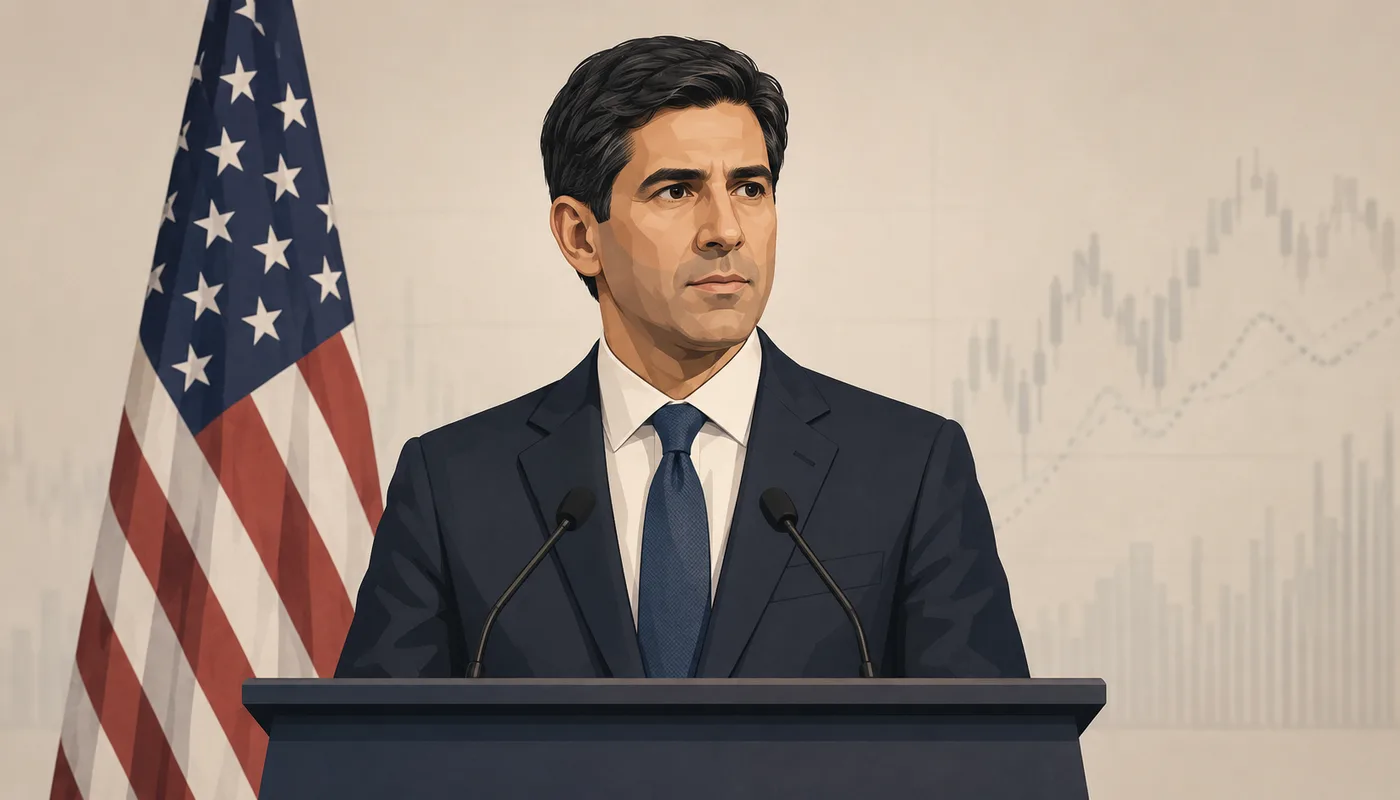
Kevin Warsh: New Fed Chair at the Crossroads of Inflation, Politics, and Markets
Kevin Warsh is the newly sworn‑in Chairman of the U.S. Federal Reserve, stepping into the job in late May 2026 as inflation remains high, markets watch rate policy closely, and political pressure for rate cuts mounts. (Federal Reserve)
Key takeaways
- Warsh confirmed and sworn in: Kevin Warsh officially took office as Chair of the Federal Reserve on May 22, 2026, after Senate confirmation. (Federal Reserve)
- Economic backdrop: Inflation in the U.S. stands elevated above the Fed’s 2% target, challenging his early policy choices. (Reuters)
- Political tension: Former President Donald Trump has publicly urged Warsh to cut interest rates, despite inflation pressures. (Financial Times)
- Policy constraints: Warsh aims to reduce the Fed’s market footprint, but high federal debt may complicate balance sheet shrinkage. (Kitco)
A new Helmsman at the Fed
Kevin Warsh’s confirmation as Chair of the Federal Reserve marks a critical juncture for U.S. monetary policy. After a 54–45 Senate vote, he took the oath of office on May 22, 2026, beginning a four‑year term leading the central bank that sets interest rates and shapes credit conditions across the economy. (Federal Reserve) Inflation remains above the Fed’s 2% target, labor data is mixed, and geopolitical shocks continue to ripple through energy and goods prices. In this environment, Warsh’s decisions over interest rates and balance sheet strategy will send signals far beyond Washington.
What Kevin Warsh’s Fed leadership means
Kevin Warsh is now the key decision‑maker for U.S. monetary policy, with major implications for borrowing costs, markets, and inflation expectations. (Federal Reserve) His role puts him at the center of debates over how aggressively the Federal Reserve should act to tame inflation without derailing growth.
Warsh takes office amid sticky inflation
Inflation trends as of June 2026 show price increases across energy, groceries, and services, pushing the Consumer Price Index well above pre‑pandemic norms and exceeding the Fed’s 2% goal. (Reuters) Persistent inflation complicates calls for rate cuts and may constrain the Fed from loosening policy too soon.
Political pressure to cut rates
Despite inflation challenges, former President Donald Trump has publicly called on Warsh to lower interest rates, arguing that high rates could slow economic growth. (Financial Times) This tension highlights a key trade‑off: maintaining central bank independence while responding to political and market expectations.
Balancing the balance sheet
Central bank balance sheet reduction—scaling back securities held since crisis-era programs—is a signature priority for Warsh. Shrinking the roughly $6.7 trillion portfolio could normalize monetary conditions but may push long‑term borrowing costs higher if Treasury demand falls. (Kitco) Analysts warn that the high U.S. debt load complicates this effort, potentially forcing more nuanced calibration.
Market implications: rates, yields, and risk assets
Under Warsh, markets are pricing mixed expectations: some traders anticipate eventual rate cuts, while others see potential for rate hikes if inflation proves persistent. (Reuters) Long‑dated Treasury yields and the shape of the yield curve reflect these divergent views, with implications for equities, mortgages, and corporate borrowing costs.
FAQ
Who is Kevin Warsh?
Kevin Warsh is the newly sworn‑in Chair of the U.S. Federal Reserve, confirmed by the Senate in May 2026 and tasked with steering monetary policy amid inflation and political headwinds. (Federal Reserve)
What are Kevin Warsh’s policy priorities as Fed Chair?
Warsh has signaled a commitment to the Federal Reserve’s core mission of price stability while considering adjustments to how inflation is measured and shrinking the central bank’s balance sheet. (Reuters)
How might Kevin Warsh’s leadership affect interest rates?
With inflation above target and mixed economic signals, Warsh’s Fed could maintain current interest rates or potentially raise them further, even as political voices advocate for cuts. (Financial Times)
Sources
- Federal Reserve, “Kevin Warsh takes oath of office as chairman of the Federal Reserve,” 2026‑05‑22.
- Financial Times, “Donald Trump piles pressure on Kevin Warsh with call for rate cut,” 2026‑06‑08.
- Reuters, “Fed’s Warsh inherits economy increasingly squeezed by inflation,” 2026‑06‑03.
- Kitco News (Reuters), “US debt load could undercut Warsh’s plan to shrink Fed balance sheet,” 2026‑05‑15.