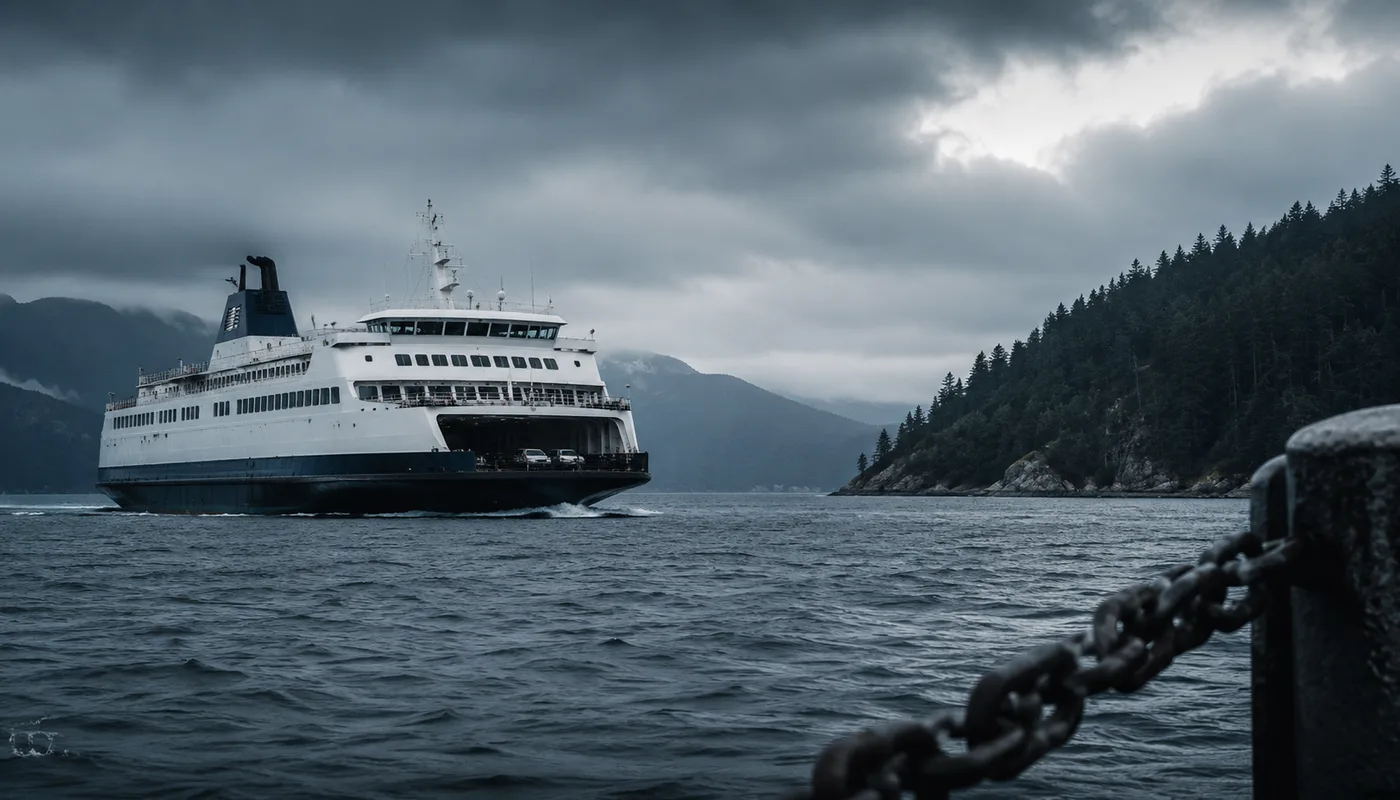
bc ferries fares are flashing a bigger warning than fuel
BC Ferries is British Columbia’s essential coastal ferry network, and its new 5% fuel surcharge signals a wider affordability fight over fares, fuel, and fleet renewal.
Key takeaways
- BC Ferries plans a temporary 5% fuel surcharge from June 16, 2026, after saying global fuel prices rose more than 40% since early March 2026, according to Global News.
- BC Ferries carried 22.7 million passengers and 9.7 million vehicles in fiscal 2024-2025, making fare policy a real consumer and business-cost issue, not a niche travel complaint, according to BC Ferries.
- Only one of BC Ferries’ 25 routes recovers its full cost from fares, so the network relies on cross-subsidization, provincial service fees, and government funding, according to BC Ferries.
- The British Columbia Ferry Commission regulates average fare increases through a price-cap system, which means BC Ferries cannot simply price its way out of every cost shock, according to the BC Ferry Commission.
- The real decision rule is simple: if fuel volatility, aging assets, and capped fares rise together, the pressure shifts to taxpayers, travellers, or service reliability.
BC Ferries’ 5% fuel surcharge exposes a deeper funding squeeze across Canada’s most important coastal ferry network.
That is the business story hiding inside a travel headline. BC Ferries is not an airline selling optional weekend escapes. It is the regulated marine highway for Vancouver Island, the Gulf Islands, coastal communities, freight operators, medical travel, tourism, and daily life on the B.C. coast.
The keyword is trending because prices are moving again. The sharper angle is that the surcharge is not the main event. It is the visible symptom of a three-way bind: fares are politically sensitive, fuel is volatile, and the fleet needs expensive renewal. That triangle is now tightening.
Why is bc ferries suddenly a business and finance story?
BC Ferries is a business-and-finance story because its cost structure affects households, freight, tourism, government budgets, and regulated infrastructure policy.
In fiscal 2024-2025, BC Ferries reported 22.7 million passengers, 9.7 million vehicles, and an estimated $8 billion in cargo across the coastal network, according to its Performance and Sustainability Report. That scale turns a fare change into a regional price signal.
The paradox is blunt. The system is essential, but most of it is not self-funding. BC Ferries says only one of its 25 routes recovers its full service cost from fares, while the rest depend on cross-subsidies, provincial service fees, and other government funding, according to BC Ferries.
That makes BC Ferries less like a normal transport company and more like a public utility with a ticket counter. Customers see a fare. The balance sheet sees a subsidy model.
What changed with the BC Ferries fuel surcharge?
BC Ferries is adding a temporary 5% fuel surcharge because fuel costs moved faster than the system’s normal fare framework can absorb.
BC Ferries plans to apply the surcharge across all routes starting June 16, 2026, according to reporting from Global News and The Canadian Press via CityNews. The company said global fuel prices had increased by more than 40% since early March 2026, and described fuel as one of its largest and most volatile operating costs, according to Global News.
As of June 6, 2026, the key word is “temporary.” BC Ferries has said the surcharge can be reduced or removed if fuel prices stabilize or decline for a sustained period, according to Global News.
The friction is obvious. A fuel surcharge is financially cleaner than permanently embedding a fuel spike into base fares. But to travellers, “temporary” often sounds like a promise with a weak expiry date.
How are BC Ferries fares regulated?
BC Ferries fares are regulated through a price-cap system set by the independent British Columbia Ferry Commission.
The Commission says its primary responsibility is to regulate fares by setting the price cap that establishes the maximum annual increase in average fares, and that the cap is set for a four-year performance term, according to the BC Ferry Commission.
That detail matters. A price cap is not the same thing as a fixed fare for every route or passenger type. It controls the weighted average, so individual fare categories can move differently while the overall increase stays within the allowed framework.
This is the myth correction: BC Ferries does not have unlimited pricing freedom. The system is designed to balance ferry users, taxpayers, and the operator’s financial sustainability. That balance becomes harder when fuel, labour, maintenance, and capital costs all rise at once.
Why is the fleet-renewal problem bigger than the surcharge?
BC Ferries’ fleet-renewal problem is bigger than the surcharge because aging vessels and terminals create long-term capital needs that fuel pricing cannot solve.
BC Ferries said in its 2024-2025 report that much of its fleet and terminal infrastructure is aging, with some assets reaching end of life, and that this is driving higher maintenance costs and reliability risk, according to BC Ferries.
The company reported 37 vessels, 47 terminals, and more than 196,465 sailings in fiscal 2024-2025, according to BC Ferries. Those are not small-system numbers. They are capital-intensive infrastructure numbers.
In March 2025, the BC Ferry Commission approved procurement of four New Major Vessels, while BC Ferries said the Commission considered a proposed fifth vessel unaffordable at that time, according to BC Ferries’ New Major Vessels Project. That decision captures the core tradeoff: buy more capacity now, or limit near-term affordability risk.
BC Ferries says it is also preparing its Performance Term 7 submission in 2026, covering the next four-year cycle, and warned that without a sustainable long-term funding model, customers could face fare increases well above 30% starting in 2028, according to BC Ferries.
What is the best way to read the BC Ferries trend?
The best way to read the BC Ferries trend is as a three-pressure framework: fuel shock, fare cap, and fleet cliff.
Fuel shock is the immediate trigger. A 5% surcharge is visible, irritating, and easy to headline.
Fare cap is the constraint. Regulation protects users from runaway price increases, but it also limits how quickly the operator can pass through costs.
Fleet cliff is the strategic risk. Aging vessels, terminal upgrades, and capacity demand require capital long after fuel prices stop trending.
That framework explains why this issue keeps returning. If one pressure rises, the system can absorb it. If all three rise together, someone pays. The choices are farepayers through higher prices, taxpayers through larger public support, or coastal communities through worse reliability.
That is the uncomfortable truth behind the surcharge. The ferry system is too essential to treat like a normal business, but too expensive to fund with slogans.
FAQ
Why is BC Ferries adding a fuel surcharge?
BC Ferries is adding a temporary 5% fuel surcharge because global fuel prices rose more than 40% since early March 2026, according to Global News.
When does the BC Ferries fuel surcharge start?
The BC Ferries fuel surcharge is scheduled to start on June 16, 2026, and apply across all routes, according to The Canadian Press via CityNews.
Are BC Ferries fares regulated?
BC Ferries fares are regulated through a price-cap system set by the independent British Columbia Ferry Commission, according to the BC Ferry Commission.
What is the bigger business issue behind BC Ferries?
The bigger issue is that BC Ferries must fund aging assets, volatile fuel costs, and fleet renewal while keeping essential routes affordable, according to BC Ferries.
Sources
- BC Ferries — Performance and Sustainability Report 2024-2025, published 2025-09-09.
- Global News — BC Ferries adding 5 per cent fuel surcharge due to global fuel prices, published 2026-06-02.
- The Canadian Press via CityNews — BC Ferries to implement 5% fuel surcharge across all routes starting June 16, published 2026-06-03.
- British Columbia Ferry Commission — Price Cap Decisions, published unknown.
- BC Ferries — New Major Vessels Project, published unknown.