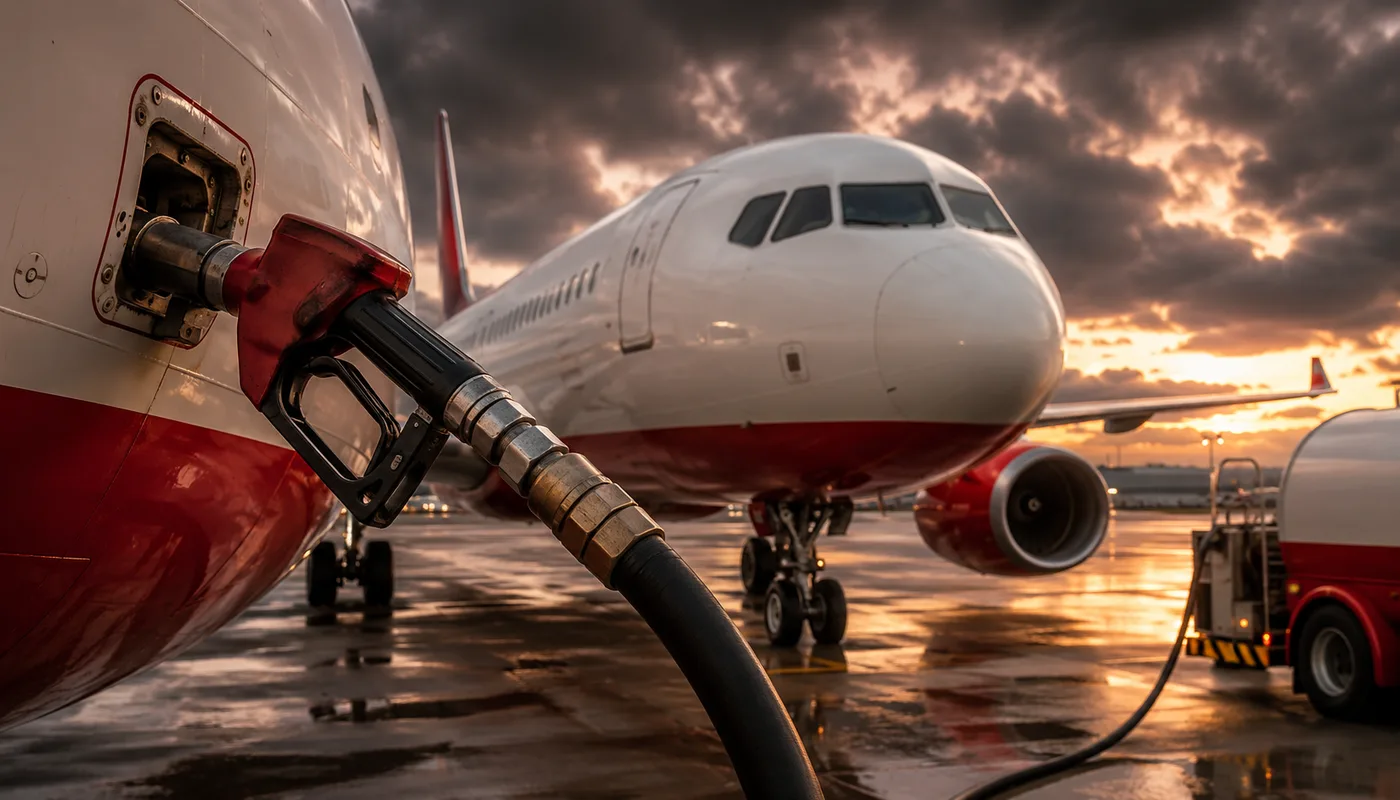
Jet Fuel in Canada: Airlines, Prices and the Cost Squeeze
Jet fuel volatility is reshaping the economics of Canada’s airlines and travel market in 2026.
Key takeaways
- Jet fuel prices surged in 2026 due to geopolitical tensions, pushing global benchmarks toward roughly double pre‑crisis levels. (Reuters)
- Fuel is a major cost for airlines, often roughly 20–30% of operating expenses, so higher jet fuel prices immediately squeeze profitability. (Reuters)
- Air Canada has suspended full‑year financial guidance for 2026 because the outlook depends heavily on volatile jet fuel costs. (Reuters)
- Canadian carriers are raising fares and trimming routes to manage fuel cost pressure, including Air Transat absorbing tens of millions in extra fuel expenses. (travelpulseCA)
- Supply chain disruptions also affect international connectivity, with flights to destinations like Cuba suspended when local jet fuel supplies dried up. (Reuters)
Jet fuel’s cost shock in Canada and airlines’ delicate balance
Jet fuel is the specialized aviation fuel that powers jet engines and is priced off global crude and refined product markets. Unlike gasoline or diesel, jet fuel has tighter storage and supply infrastructure, making it highly sensitive to global supply shocks. In 2026, geopolitical tensions — notably the war involving Iran — disrupted crude exports and fuel flows through critical shipping routes such as the Strait of Hormuz, sharply lifting the price of refined fuels, including jet fuel. (Reuters)
For Canadian airlines, this isn’t an abstract commodity story: fuel prices are corporate budget line items that directly alter profitability and strategy. The cost of jet fuel can amount to nearly a third of an airline’s operating expenses. When the price of jet fuel climbs, revenues must stretch farther, profit margins shrink, and decisions about routes, fares, and capacity tighten. (Reuters)
In early 2026, prices roughly doubled relative to recent norms, squeezing carriers that can’t fully hedge against rapid price moves. Carriers like Air Transat reported roughly $70 million in extra fuel costs over March and April alone — a roughly 75% year‑over‑year jump even after hedging protections. (travelpulseCA)
How rising jet fuel prices are changing airline economics
Jet fuel volatility acts like a tax on flight economics. Airlines must choose how much of higher fuel costs they absorb versus how much they pass on to passengers — and that choice has competing pressures.
Fuel price surge fundamentals
Jet fuel isn’t priced in isolation: it’s a refined product whose cost travels with crude oil benchmarks like Brent and West Texas Intermediate. When global supply constraints pinch crude markets, refiners face higher input costs. Fuel markets tightened in early 2026 after disruptions in Middle East crude flows, pushing refined fuel costs up sharply and, consequently, jet fuel derived from them. (Reuters)
This shock is amplified by limited global jet fuel inventories and specialized storage, which don’t provide the buffer seen in other fuel markets. That means small disruptions in crude flow or refining output can trigger outsized price swings — and those swings get reflected quickly in airline fuel bills.
Airlines’ response choices
Airlines typically respond to prolonged fuel cost increases in three ways:
- Raising fares and adding fuel surcharges to shift costs to customers. As the Canadian Press reported, carriers including Air Canada and WestJet have begun adjusting ticket prices and surcharges in response to higher fuel costs. (CityNews Montreal)
- Trimming capacity on marginal routes where high fuel costs make flights unprofitable. Some seasonal or low‑demand flights have been reduced or suspended as part of cost management. (travelpulseCA)
- Suspending financial guidance when cost volatility makes accurate forecasts unreliable. Air Canada itself pulled full‑year 2026 guidance because jet fuel price unpredictability undermines planning. (Reuters)
The tradeoff is plain: passing costs fully to customers risks dampening demand, while absorbing costs erodes margins and could ultimately push weaker carriers into distress or consolidation. High fuel costs have historically been cited as a factor in airline bankruptcies and industry consolidation, particularly for carriers with thinner margins. (Reuters)
Why Canadians feel this beyond airline balance sheets
Jet fuel pricing doesn’t stay confined to airline boardrooms. It shows up in what travelers pay for tickets, especially on long‑haul and international flights. Analysts and travel reporting suggest airfare increases of up to 20% could materialize if fuel remains elevated, particularly on transatlantic routes where fuel use is heavier. (Travel and Tour World)
For Canadian domestic travel, price changes may be more muted but still present. Major carriers will likely continue adjusting at the margin: trimming less profitable regional routes or adding fuel surcharges to ticket pricing where demand is stronger. (travelpulseCA)
Another downstream effect is capacity flexibility. When fuel costs spike, airlines may reduce frequency on routes with thin margins and redeploy aircraft where revenue yields are stronger. That reshaping of schedules can affect connectivity, especially for smaller markets.
Canada’s refining picture and jet fuel supply
Canada does have domestic refining capacity, but it is not optimized for jet fuel production. Refined petroleum products (RPPs) like jet fuel are produced at Canadian refineries, yet the share of domestic jet fuel demand met by local production can be limited. In regions like Ontario and Quebec, roughly a third of jet fuel was imported as of 2024, with modest growth in domestic production anticipated over the longer term. (Canada Energy Regulator)
In response to higher market prices, domestic producers such as Imperial Oil have shifted refinery output toward diesel and jet fuel molecules, capitalizing on strong pricing. (Global News) Still, refineries abroad — in South Korea and other refining hubs — play a larger role in global jet fuel export markets, and disruptions there can feed back quickly into Canadian prices. (Reuters)
What stays uncertain
The biggest question hanging over the Canadian airline business is how persistent elevated jet fuel prices will remain. Prices could stabilize if geopolitical tensions ease, new supply options come online, or refined product logistics normalize. But if volatility persists, 2026 may see ongoing fare adjustments, operational shifts, and continued stress on airline planning.
Airlines’ ability to hedge future fuel consumption will also matter: carriers with aggressive hedging strategies can lock in prices and create a shield against sudden spikes. Those buying most fuel on the spot market face the full brunt of price swings.
FAQ
Why are jet fuel costs rising in 2026?
Jet fuel costs have surged in 2026 largely due to geopolitical tensions in the Middle East, which have disrupted crude oil shipment routes and driven up refined fuel prices worldwide. (Reuters)
How does jet fuel affect airline ticket prices?
Jet fuel is a significant operating cost for airlines, often around a quarter of total expenses, and when fuel prices rise, carriers typically increase ticket prices and fuel surcharges to offset expenses. (Reuters)
What actions are Canadian airlines taking in response?
Canadian carriers are adjusting by raising fares, trimming flight capacity on less profitable routes, and suspending full‑year financial guidance due to jet fuel cost uncertainty. (Reuters)
Sources
- Reuters, “Air Canada suspends 2026 forecast on Iran war uncertainty despite sturdy travel demand”, April 30, 2026. (Reuters)
- CityNews, “Jet fuel prices starting to rise as Iran war pushes jet fuel prices higher”, March 11, 2026. (CityNews Halifax)
- TravelPulse Canada, “Air Transat: Fuel Costs Add $70M Pressure”, May 20, 2026. (travelpulseCA)
- Reuters, “Canadian airlines suspend Cuba flights as island set to run out of jet fuel”, February 9, 2026. (Reuters)
- Global News, “Imperial Oil churning out more diesel, jet fuel as Mideast war drives up prices”, May 2026. (Global News)