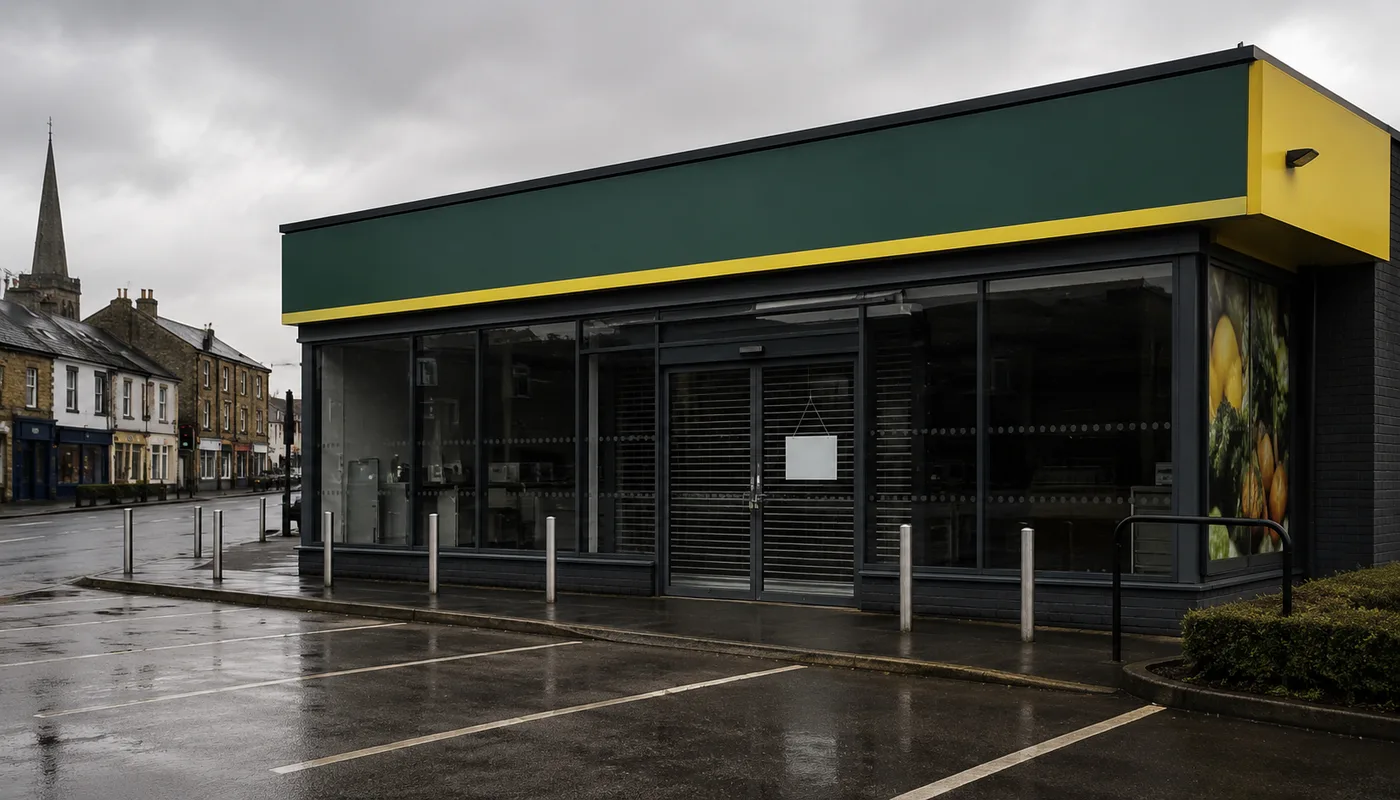
Morrisons plans to close company owned stores across the United Kingdom: 100 Morrisons Daily closures reshaping UK convenience retail
Morrisons is closing about 100 company‑owned convenience stores across the United Kingdom after persistent losses, shifting investment to franchise growth and tightening cost pressures. (Retail Gazette)
Key takeaways
- Morrisons plans to close around 100 company‑owned ‘Morrisons Daily’ convenience stores across the UK in 2026, primarily loss‑making sites inherited from its 2022 acquisition of McColl’s. (Retail Gazette)
- These closures are concentrated in smaller convenience outlets and do not include larger Morrisons supermarkets or independently‑owned franchise locations. (Business News Today - UK Business News)
- Hundreds of jobs face risk as the retailer begins consultations with affected staff, with internal redeployment offered where feasible. (The Grocer)
- Morrisons blames structural business costs including rising wages and statutory burdens that have worsened profitability in small‑format formats. (Business News Today - UK Business News)
- The broader strategy refocuses resources on higher‑growth formats and cost control amid competitive pressure from discount rivals. (Business News Today - UK Business News)
What “Morrisons plans to close company owned stores across the United Kingdom” means
Morrisons’ 2026 closure programme means the Bradford‑based supermarket group is winding down around 100 of its company‑owned Morrisons Daily convenience stores across the UK. (Retail Gazette) These are smaller, high‑street or neighbourhood stores that the company runs directly, as opposed to its larger supermarkets or independently‑owned franchise partners. (Business News Today - UK Business News) The closures stem from persistent financial losses concentrated in sites acquired from McColl’s, a convenience chain Morrisons bought out of administration in 2022 for £190 million. (Business News Today - UK Business News)
This is not a blanket shutdown of the core supermarket estate; rather, it reflects a recalibration towards more profitable retail formats and a response to rising operating costs. (Business News Today - UK Business News)
The scale and scope of the closure programme
Morrisons is closing about 100 company‑owned convenience stores, a significant contraction from its wider network. (Retail Gazette) The total convenience footprint under Morrisons Daily was roughly 1,700 locations—split between company‑managed and franchise‑run outlets. (Business News Today - UK Business News) The targeted closures exclusively affect the company‑owned segment, with franchise partners exempt and continuing expansion plans. (Business News Today - UK Business News)
This distinction matters: company‑owned stores carry full corporate liabilities including staffing costs and statutory obligations, while franchise outlets carry more localised risk and flexibility. (Business News Today - UK Business News)
First wave: concrete closures in 2026
Morrisons confirmed the first seven specific closures in early June 2026, all in Yorkshire and surrounding areas, including sites in York, Redcar, Loftus, Guisborough, Stokesley, Hull and South Driffield. (The Sun) These examples underscore the uneven performance across the estate, where location‑specific challenges outweighed broader brand support.
Why these closures are happening now
Morrisons says these stores have been loss‑making for years and are no longer financially tenable. (Business News Today - UK Business News) The company and analysts point to a combination of structural cost pressures and competitive headwinds:
- Rising statutory employment costs including consecutive increases in the National Living Wage and employer National Insurance Contributions have lifted fixed operating expenses for small stores. (Business News Today - UK Business News)
- Legacy performance issues from McColl’s’ historical underperformance meant some locations never achieved sustainable profitability even after rebranding and investment. (Business News Today - UK Business News)
- High street competition and consumer shifts towards discount and online channels have thinned footfall for traditional local convenience formats. (Business News Today - UK Business News)
In this climate, corporate leadership judged that continuing to subsidise these unprofitable company‑owned outlets would erode overall financial stability. (Business News Today - UK Business News)
Jobs at risk and company response
Hundreds of jobs are at risk as Morrisons enters redundancy consultations with crews at the affected convenience stores. (The Grocer) The company says it plans to offer redeployment opportunities within its broader supermarkets, logistics and manufacturing operations where possible. (The Sun)
Morrisons’ consultations follow UK statutory requirements for collective engagement and have involved union representatives to explore alternatives to compulsory redundancies. (Business News Today - UK Business News) However, employment impacts will vary by region; staff in more remote or rural closures may face practical limits on redeployment due to commuting constraints. (Business News Today - UK Business News)
What stays open: supermarkets and franchise stores
The closures do not extend to Morrisons’ main supermarkets—the larger full‑format grocery outlets that anchor its market presence across England, Scotland and Wales. (Business News Today - UK Business News)
Nor are independently owned Morrisons Daily franchise stores part of this programme; these franchise partners are actively growing their footprint and remain operational. (Business News Today - UK Business News) Future growth for Morrisons in convenience retail may lean more heavily on this lower‑risk franchise model rather than direct ownership.
A market under pressure: context within UK retail
Morrisons’ decision reflects broader stress across the UK high street and convenience retailing. Many traditional retailers have reduced physical footprints amid rising costs, weaker footfall, and competition from discounters and online channels. (Business News Today - UK Business News) For supermarkets, the balance between maintaining local presence and managing thin margins has never been more acute.
In addition, Morrisons sits lower in market share than some rivals; as of early 2026, its overall UK grocery share was around 8.4 %, trailing larger chains and aggressive discounters. (Business News Today - UK Business News) Pruning unprofitable outlets is thus a tactical move to protect the core business and improve overall efficiency.
What this means for shoppers and landlords
For shoppers in affected locales, closures mean fewer immediate options for convenience goods, though Morrisons says it will encourage customers to use nearby stores or online delivery where possible. (The Sun)
For landlords and commercial real estate markets, this wave of closures may add to broader vacancy pressure on UK high streets. Retail property values and rental yields are already under strain in many town centres, and exits by familiar brands can amplify those trends. (Business News Today - UK Business News)
What changed in 2026
As of mid‑2026, Morrisons publicly confirmed its closure plan after weeks of industry speculation. Earlier reporting indicated the plan was being finalised as part of a wider corporate review of costs and performance. (Sky News) These announcements make the contraction official and set a timetable for phased shutdowns over the coming months.
Risks, trade‑offs, and myth corrections
This is not an existential collapse of Morrisons’ retail empire. While headlines about “100 store closures” can alarm, the total footprint of convenience sites under Morrisons Daily is large, and the closures affect only a subset of underperformers. (Business News Today - UK Business News) In contrast, larger supermarkets and franchise outlets remain part of its strategy.
That said, the closures signal the trade‑off between local presence and profitability in grocery retail. Retailers must balance service coverage with the economics of thin margins and rising fixed costs, a tension especially acute in convenience formats. (Business News Today - UK Business News)
FAQ
Why is Morrisons closing around 100 company‑owned convenience stores?
Morrisons is closing about 100 loss‑making, company‑owned Morrisons Daily convenience stores in the UK because they failed to achieve sustainable profitability, and rising structural costs made them financially untenable. (Business News Today - UK Business News)
Will Morrisons’ main supermarkets be affected by these closures?
No, the closures are confined to smaller, company‑owned convenience outlets; larger Morrisons supermarkets and franchise‑operated Morrisons Daily stores are not part of the closure plan. (Business News Today - UK Business News)
How will these closures affect jobs?
Hundreds of jobs are at risk as Morrisons begins consultations with affected staff, though the company says it will seek redeployment opportunities within its wider business where possible. (The Grocer)
Sources
- Retail Gazette, “Morrisons Daily closures: What’s the supermarket doing with its c‑stores?”, 2026‑06‑01.
- The Grocer, “Morrisons to close 100 Morrisons Daily stores affecting hundreds of jobs”, 2026‑05‑22.
- The Sun, “Morrisons confirms 7 locations shutting across UK as it plots 100 store closures”, 2026‑06‑01.
- Business News Today, “Morrisons Convenience Store Closures: 2026 Guide & Store Impact”, 2026‑06‑01.