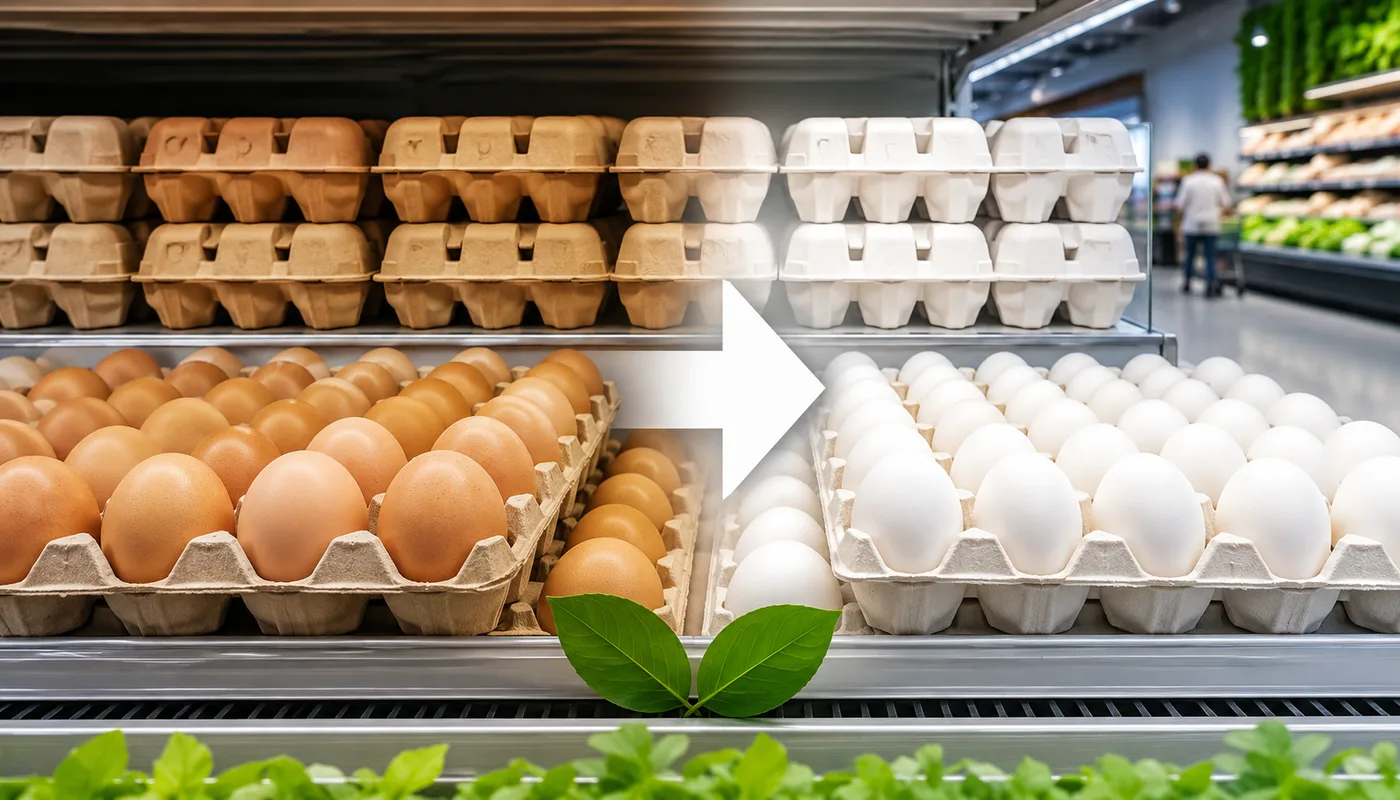
Sainsbury’s Brown Egg Policy: UK Supermarket Ditches Brown Eggs for Lower Emissions
Sainsbury’s brown egg policy means the UK supermarket will phase out own‑brand brown eggs and sell only white eggs to cut carbon emissions across its supply chain. (Retail Gazette)
Key takeaways
- Strategic shift for net zero: Sainsbury’s, the UK’s second‑largest supermarket, plans to replace brown eggs with white‑shelled eggs in its own‑brand range to support its net zero ambitions. (Retail Gazette)
- Carbon reduction claim: A life‑cycle assessment found white eggs have around a 12.7% smaller carbon footprint than brown eggs due to differences in hen feed efficiency and lifespan. (Retail Gazette)
- No change in nutrition or taste: Shell colour does not affect egg nutrition or flavour, and Sainsbury’s says quality standards remain unchanged. (Netmums)
- Market and supply impacts: Brown eggs currently dominate UK shelves, and the transition will require changes in the national egg flock and possibly disrupt supply relationships. (infrastructure-now.co.uk)
- Consumer and industry reaction: The policy has drawn both praise and criticism, with animal welfare groups and farmers questioning the environmental case and welfare implications. (The Telegraph)
What the Sainsbury’s brown egg policy actually dictates
The Sainsbury’s brown egg policy is not a government ban on brown eggs but a corporate product strategy where the supermarket will only sell white‑shelled eggs under its own‑brand label in the UK. This shift is positioned as part of a broader effort to reduce supply‑chain carbon emissions and edge closer to its net zero targets for own operations by 2035 and across suppliers by 2050. (Retail Gazette)
The policy is unilateral to Sainsbury’s own ranges; branded brown eggs from third‑party suppliers are not barred by law and may continue to be available in other parts of its stores. (Netmums)
Why the colour of an egg matters for emissions
Sainsbury’s argues that white‑shelled eggs can lower carbon emissions because the hens that lay them tend to be smaller, more feed‑efficient and have longer productive lives than those laying brown eggs. According to a carbon assessment compiled for the retailer, white eggs produced in Sainsbury’s supply chain have about 12.7% lower overall emissions per kilogram than brown eggs. (Retail Gazette)
The rationale emphasises three linked mechanisms:
- Feed demand: Smaller white hens require less feed per egg, reducing emissions from crop production and processing. (Retail Gazette)
- Lifespan and output: Longer laying lives mean more eggs per hen, spreading upstream emissions over greater output. (Retail Gazette)
- Resource intensity: Less manure and associated methane/nitrous oxide emissions are produced overall. (Retail Gazette)
This efficiency framing differentiates Sainsbury’s approach from a simple marketing repositioning — it treats hen breed characteristics as a lever in reducing scope 3 supply‑chain emissions, the portion of total emissions outside direct operations but embedded in suppliers. (Retail Gazette)
Nutrition, taste and consumer perceptions
Contrary to popular belief, shell colour does not affect the taste or nutritional content of an egg: a white egg and a brown egg with identical hen diet and freshness will have the same protein, fat and micronutrient profile. (Netmums)
Brown eggs became dominant in the UK from the 1970s after consumers associated their colour with traditional, natural farming and perceived higher welfare standards, even though these perceptions are not grounded in nutritional science. (The Independent)
For customers, the immediate experience is simple: the eggs may look different, but recipes, baking outcomes, and culinary performance will remain unaffected.
Market and supply chain implications
The shift to white eggs could ripple through the UK egg sector:
- Supply realignment: White‑egg‑laying hens reportedly make up only around 15% of the UK flock, with brown‑egg layers having dominated for decades. This means producers may need to adjust breeding and rearing strategies over time. (infrastructure-now.co.uk)
- Shelf dynamics: Brown eggs are a familiar sight for British shoppers. As own‑brand brown eggs disappear from Sainsbury’s shelves, loyal customers may switch to branded brown eggs in the store or at rival supermarkets. (Netmums)
- Price effects: If demand for white eggs outstrips supply, short‑term price pressures could emerge, though Sainsbury’s has not signalled price changes for consumers. (Retail Gazette)
This policy forces a classic trade‑off: Sainsbury’s hopes environmental branding and lower carbon will outweigh shoppers’ entrenched preferences for brown shells.
Controversies and industry pushback
The policy has sparked debate:
- Animal welfare advocates have raised concerns that emphasising breed efficiency may not correlate straightforwardly with welfare outcomes, urging focus on housing and management rather than shell colour. (The Telegraph)
- Critics in the press have derided the move as symbolic or superficial, suggesting it oversimplifies net zero strategies. (The Telegraph)
- Farmers’ groups and supply chain voices note that if white hens are not common in existing flocks, ramping up production may take time and investment. (infrastructure-now.co.uk)
The industry friction underscores a broader pattern in agribusiness: environmental credentials are increasingly reshaping product lines and supply networks, but the optimal path remains contested.
What shoppers should expect as the policy rolls out
For most UK consumers:
- Own‑brand brown eggs will become rare at Sainsbury’s stores over the coming months. (Netmums)
- Branded brown eggs from suppliers may still be available alongside white own‑brand options. (Netmums)
- Free‑range status and quality standards are unchanged for Sainsbury’s eggs; only the hen breed and shell colour are shifting. (Netmums)
Whether this sparks a broader industry pivot — such as rivals like Tesco or Waitrose adopting similar policies — remains to be seen, but Sainsbury’s move is a rare case where even the colour of an egg is being reframed as a business lever in the climate era.
FAQ
What is Sainsbury’s brown egg policy?
The policy means Sainsbury’s will remove own‑brand brown eggs and sell only white‑shelled eggs to reduce supply‑chain carbon emissions as part of its net zero strategy. (Netmums)
Why are white eggs considered lower carbon?
Sainsbury’s says hens that lay white eggs eat less feed and have longer productive lives, which translates into about a 12.7% lower carbon footprint per kilogram of eggs compared with brown eggs. (Retail Gazette)
Will nutritional quality change with the switch to white eggs?
No — shell colour does not affect nutritional content or taste, and Sainsbury’s insists its white eggs match brown eggs in quality. (Netmums)
Sources
- The Independent (2026‑06‑04): Sainsbury’s to stop selling brown eggs in net zero push. https://www.independent.co.uk/news/uk/home-news/sainsburys-brown-eggs-white-net-zero-b2989354.html
- Retail Gazette (2026‑06‑04): Sainsbury’s swaps brown eggs for white in net zero push. https://www.retailgazette.co.uk/blog/2026/06/sainsburys-swaps-brown-eggs-for-white-in-net-zero-push/
- Netmums (2026‑06‑05): Why Sainsbury’s is banning brown eggs from its supermarkets? https://www.netmums.com/life/why-is-sainsburys-banning-brown-eggs-from-its-supermarkets