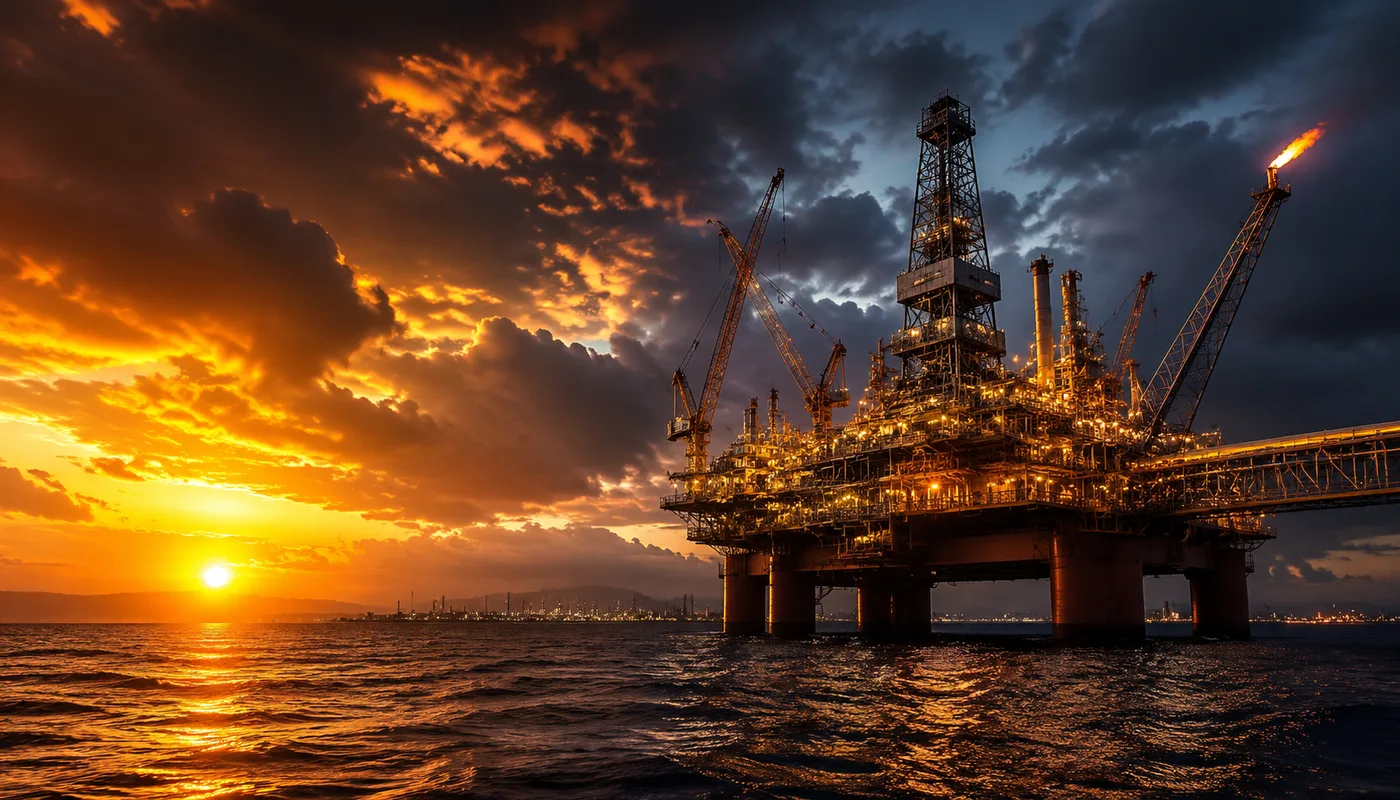
Shell plc’s 2026 Strategic Pivot: Buybacks, ARC Deal and Geopolitical Dynamics
Shell plc’s 2026 strategy blends strong quarterly earnings, a focused $3.0 billion share buyback, and a major acquisition amid geopolitical energy pressures.
Key takeaways
- Earnings & capital returns: Shell plc reported $6.9 billion in adjusted earnings in Q1 2026, beating forecasts and supporting a 5% dividend increase and a $3.0 billion share buyback programme. (GlobeNewswire)
- M&A shift: Shell agreed to acquire ARC Resources Ltd, bringing ~370,000 barrels of oil equivalent per day (kboe/d) and aiming for 4% production CAGR through 2030. (GlobeNewswire)
- Balance sheet pressures: Working capital outflows rose sharply due to commodity volatility, lifting net debt while prompting a trimmed buyback cadence. (HL)
- Geopolitical friction: Shell’s LNG output in Qatar was disrupted by regional attacks, a risk factor even as global oil price volatility boosted downstream performance. (Shell)
Strong numbers, strategic rebalancing
Shell plc is one of the United Kingdom’s largest listed energy companies, with global operations spanning upstream production, refining, chemicals and renewables. In Q1 2026, the company reported adjusted earnings of $6.9 billion, significantly outperforming analyst expectations and its own prior-quarter performance. (GlobeNewswire) That profit beat helped justify a 5% dividend raise and a new $3.0 billion share buyback programme, underlining a renewed focus on returning cash to shareholders even as the energy landscape remains volatile. (GlobeNewswire)
This mix of strong results and capital allocation reflects Shell’s effort to balance investor returns with operational resilience. But there’s friction beneath the surface: working capital swings tied to commodity price volatility dented free cash flow and lifted net debt, prompting some investors to watch how buybacks evolve through the year. (HL)
Shareholder returns: buybacks and dividends in focus
Shell’s capital return policy in 2026 has become a central decision point for investors watching UK energy stocks. On May 7, 2026, the company announced a $3.0 billion share buyback programme to operate over roughly three months, purchasing ordinary shares on the London Stock Exchange to reduce issued share capital. (Shell) All repurchased shares are slated for cancellation, a move that can boost earnings per share and signal management confidence.
The buyback follows a slightly larger programme earlier in the year that was trimmed as Shell navigated cash needs tied to working capital and strategic deployment of capital. (GlobeNewswire) The share repurchase is paired with a 5% increase in the quarterly dividend, maintaining a progressive payout in line with Shell’s historic distribution policy. (GlobeNewswire)
Together, buybacks and dividends form a framework Shell uses to deliver shareholder value while reserving flexibility to invest and weather commodity swings.
M&A: ARC Resources acquisition as production ballast
Beyond distributions, Shell is employing mergers and acquisitions to reshape its portfolio. In April 2026, Shell entered a definitive agreement to acquire Canadian energy firm ARC Resources Ltd. (Shell)
The deal is designed to add roughly 370 kboe/d of oil and gas production and drive a 4% compound annual growth rate (CAGR) in Shell’s output through 2030 compared with prior slower growth forecasts. (GlobeNewswire) That’s a marked shift from the company’s asset-light strategies seen earlier in the decade and represents one of the largest Shell deals in years. (GlobeNewswire)
For UK markets, the ARC acquisition signals that Shell is keen to strengthen reserves and production capacity even as energy transition narratives push majors to pivot capital toward lower‑carbon segments. The challenge for investors is balancing near‑term returns with long‑term portfolio transformation.
Middle East volatility: risk meets opportunity
Shell’s 2026 performance cannot be separated from macro energy market volatility. Conflicts in the Middle East have pressured supply chains, impacted liquefied natural gas (LNG) operations, and driven commodity price spikes that benefit integrated energy producers.
In March 2026, Shell reported that some of its Qatar LNG interests were shut down following attacks on Ras Laffan Industrial City, although the broader Pearl GTL facility remained in a safe state while assessments continued. (Shell) That kind of disruption exemplifies the geopolitical risks energy companies face, even as higher global oil and gas prices buoy earnings.
These dynamics create both headwinds and tailwinds. On the one hand, conflict‑induced supply constraints can lift prices, helping upstream and trading margins. On the other, they inject uncertainty into volume forecasts and capital planning, especially for LNG and gas‑linked contracts where long‑term demand is sensitive to regional stability.
Balance sheet and market reaction
While earnings impressed in Q1, analysts have flagged that working capital outflows and higher net debt temper some of the good news. Free cash flow, excluding operational swings, remained healthy, but volatility pushed more cash into inventories and receivables, a common stress point when prices jump or contracts lag. (HL)
From a market perspective, Shell’s stock has shown resilience relative to broader indices. Recent trading data indicates days where Shell’s share price outperformed a declining FTSE 100, though it still trades below its 52‑week highs. (MarketWatch)
For investors focused on UK equities, these patterns suggest Shell is maintaining investor confidence even in the face of wider market softness.
Strategic tradeoffs: growth vs returns
Shell’s 2026 strategy highlights a key tradeoff for large energy firms: how to balance capital returns, strategic growth, and risk management in an era of geopolitical flux and transition pressures. The ARC Resources acquisition bets on production growth and reserve replacement, a traditional oil‑major play. Meanwhile, robust buybacks and dividends provide immediate investor value. Yet, working capital demands and debt dynamics reflect the costs of operating in volatile global markets.
Understanding this mix is essential for UK investors and analysts: Shell is not merely riding commodity prices but actively reshaping its portfolio and return policies, even as external risks ebb and flow.
FAQ
What is Shell plc’s financial performance in 2026?
In Q1 2026 Shell plc reported adjusted earnings of $6.9 billion, exceeded estimates, raised its dividend by 5%, and initiated a $3.0 billion share buyback programme to support shareholder returns. (GlobeNewswire)
Why is Shell acquiring ARC Resources Ltd?
Shell’s acquisition of ARC Resources Ltd aims to add about 370 kboe/d of production and support a 4% production CAGR through 2030, helping offset natural declines and strengthen long‑term output. (GlobeNewswire)
How have geopolitical events affected Shell’s operations?
Shell’s LNG operations in Qatar were disrupted after regional attacks in March 2026, but global oil price volatility linked to Middle East tensions has also boosted integrated energy earnings. (Shell)
Sources
- Shell plc publishes first quarter 2026 press release — Shell plc (2026‑05‑07).
- Shell announces agreement to acquire Canadian energy company, ARC Resources Ltd — Shell plc (2026‑04‑27).
- Share buybacks | Shell Global — Shell plc (2026‑06).
- Impact of Middle East conflict on Shell activities — Shell plc (2026‑03‑19).
- Shell (Q1 Results): strong quarter, buyback trimmed — HL (2026).
- Shell rises Monday, outperforms market — MarketWatch (2026‑06‑01).
- Shell advances Wednesday, outperforms market — MarketWatch (2026‑06‑03).