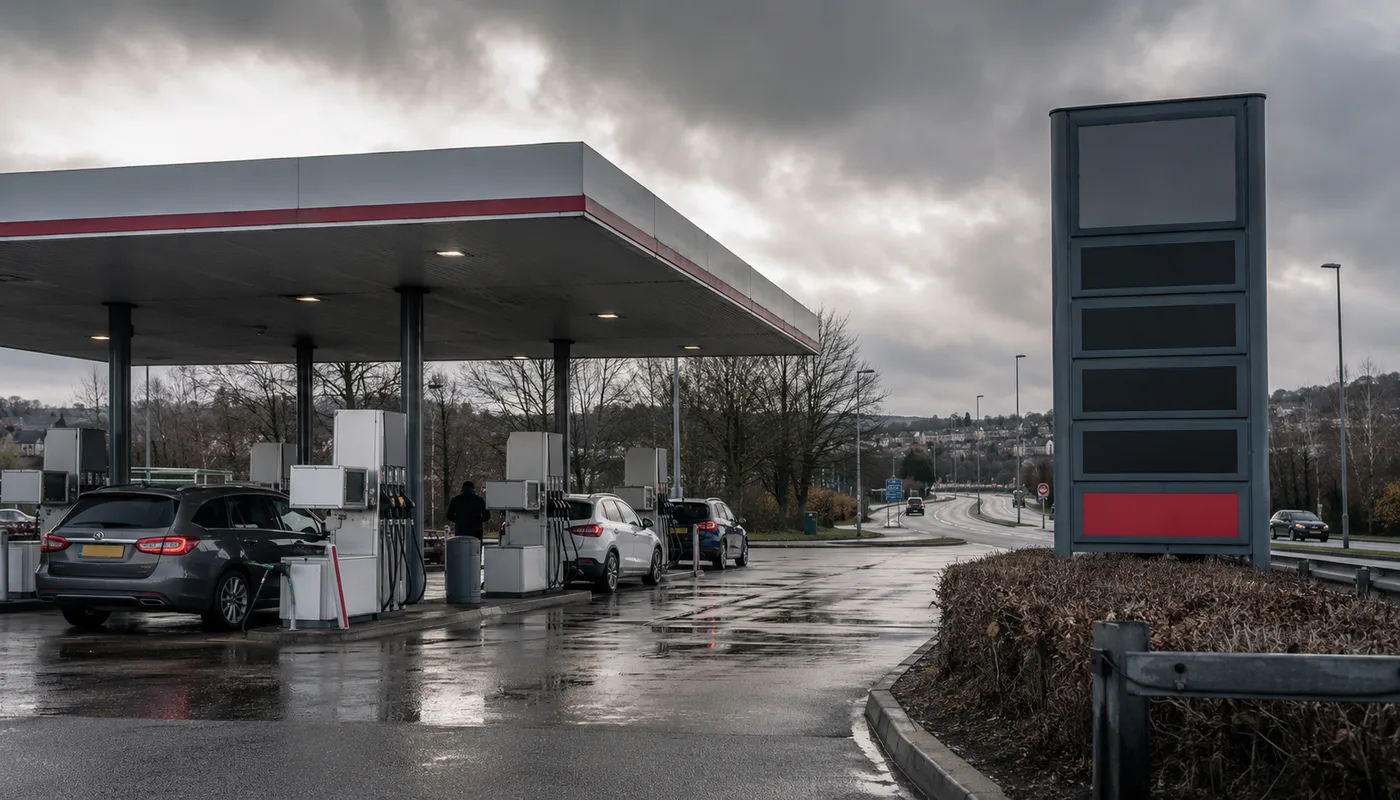
UK fuel stations face a structural squeeze: rising costs, fading numbers, and consumer pressure
UK fuel stations are shrinking and squeezed by rising wholesale costs, weak competition, declining demand, and new pricing transparency rules.
Key takeaways
- The UK fuel station network continues to shrink; historical data show a drop from ~40,000 forecourts in the 1960s to ~8,300 today. (Fuelwise)
- Fuel prices at the pump remain high due to global oil costs, with average petrol ~158 p per litre across nearly 8,000 stations in June 2026. (Fuel Finder)
- The Competition and Markets Authority (CMA) found no evidence of price manipulation but flagged weak competition and persistent retailer margins. (GOV.UK)
- New UK rules force stations to report price changes within 30 minutes, boosting transparency but adding compliance complexity. (petrol-prices.co.uk)
- Supermarkets and membership models (e.g., Costco) typically offer cheaper fuel than branded networks like BP or Shell. (cheapestfuelfinder.com)
UK fuel stations: a sector at an inflection point
The UK’s network of fuel stations — the physical forecourts where petrol, diesel, and increasingly alternate fuels are sold — is shrinking and under economic pressure in 2026. This matters because forecourts are critical for road transport, logistics, and local commerce. Drivers are paying historically high prices, regulators are tightening price reporting rules, and forecourt operators are rethinking what a fuel station sells beyond litres of fuel.
Today’s landscape reflects both long-term decline in fuel demand and short-term cost shock from global oil markets. Understanding how competition, pricing, and structural changes intersect gives investors and policymakers a clearer picture of the sector’s stress points and opportunities.
Fuel prices still high — largely from wholesale costs
Average UK petrol prices remain elevated in 2026, with data showing an average of about 158 p per litre for petrol across roughly 7,749 stations in June 2026. Diesel averaged ~181 p per litre. (Fuel Finder) These prices contribute directly to household transport costs and business logistics expenditures.
The Competition and Markets Authority’s latest monitoring report concluded that recent fuel price rises were driven primarily by higher wholesale oil costs tied to global geopolitical tensions rather than deliberate retail price manipulation. (GOV.UK) The CMA observed that retailer margins — the difference between what stations pay for fuel and what they charge consumers — have remained relatively stable, though slightly elevated compared with some historical averages. (Auto Express)
The regulatory squeeze: price transparency and competition concerns
In February 2026, the UK government implemented the Fuel Finder Scheme, requiring most petrol stations to report price changes to a central database within 30 minutes. (petrol-prices.co.uk) The intent is to empower motorists with real-time price information, encouraging them to compare prices before filling up.
This increased transparency has two effects. First, it helps drivers find lower prices and can save “up to £9 per tank” when motorists shop around. (GOV.UK) Second, it raises the compliance burden on operators, particularly smaller independents with limited administrative capacity.
Despite these reforms, the CMA has repeatedly flagged weak competition in the fuel retail sector. A lack of competitive pressure can keep margins higher than necessary, especially where a few large players dominate. (LBC)
Structural decline: fewer forecourts, changing economics
The UK’s fuel station count has contracted dramatically over decades, from an estimated ~40,000 in 1967 to roughly ~8,300 in early 2026. (Fuelwise) That’s a drop of nearly 80 %. This decline is driven by multiple forces:
- Lower fuel demand: Cars are more efficient, and electric vehicles diffuse demand for petrol and diesel.
- Supermarket competition: Large retail chains undercut traditional stations on price, leveraging fuel as a loss leader.
- Strategic divestment: Major oil companies are shrinking their retail networks to focus on alternative fuels and higher-margin businesses.
- Land economics: Forecourt sites often represent valuable parcels that attract redevelopment interest.
- Regulatory costs: Environmental compliance and maintenance costs squeeze slim fuel margins. (Fuelwise)
This structural contraction isn’t purely a number. It affects rural mobility and logistics. In sparsely populated areas, the closure of a single station can mean a long round trip for the nearest alternative, raising both cost and time burdens for residents and businesses alike. (Fuelwise)
Where the price battle plays out: supermarkets and memberships
Consumers still have levers to reduce fuel costs. Physical price-indexing data show that supermarkets like Tesco, Sainsbury’s, Asda, and Morrisons typically price petrol cheaper than branded fuel networks. (cheapestfuelfinder.com) Tesco and Sainsbury’s also tie fuel pricing to loyalty programs, while Costco’s membership-only model often undercuts even supermarket prices, offsetting the membership cost for frequent drivers. (cheapestfuelfinder.com)
This competition matrix matters for both everyday drivers and fleet managers. Where station density is high, price transparency tools can highlight differences of 5–10 p per litre or more. In less competitive or rural markets, these spreads can widen and reduce drivers’ ability to lower their fuel bill.
Toward 2027: diversification and digital demand
Beyond fuel pricing, the economics of fuel stations are pushing operators toward diversified service offerings. Industry reports highlight a shift to food-to-go, digital engagement, and multi‑purpose retail spaces at forecourts to capture non‑fuel revenues. (Lumina Intelligence) This diversification can make sites more resilient as core fuel revenues shrink.
These strategies, along with evolving payment options like fuel cards and integration with EV charging infrastructure, will be central to how the UK forecourt market adapts. Operators willing to innovate on experience and pricing transparency may weather the current cost pressures better than those relying on traditional litres‑sold economics.
FAQ
Are UK fuel stations raising prices unfairly due to global tensions?
The UK regulator found no evidence fuel retailers have exploited global conflicts to boost prices; price rises mainly reflect higher wholesale oil costs and weak competition, not deliberate retail gouging. (GOV.UK)
Why are petrol stations closing in the UK?
Petrol stations are closing because demand for conventional fuel is declining, supermarket and membership models compress margins, operating and compliance costs rise, and major oil companies are divesting forecourt assets. (Fuelwise)
How can drivers in the UK find cheaper fuel?
Drivers can use the government’s Fuel Finder and commercial price comparison tools to locate lower‑priced stations, with potential savings of up to about £9 per tank by choosing wisely. (GOV.UK)
Sources
- GOV.UK: CMA publishes new monitoring update on road fuel market (2026‑06‑01) — UK Government report on fuel prices and competition.
- Fuelwise: The Disappearing Petrol Station (2026‑03‑05) — historical trend data on UK forecourt closures.
- PetrolPrices.co.uk: The UK Government Fuel Finder Scheme Is Now In Force For Petrol Stations (2026‑02‑10) — details on the new reporting requirements.