Fuel Is Cooling at the Pump, but Diesel Costs Still Bite
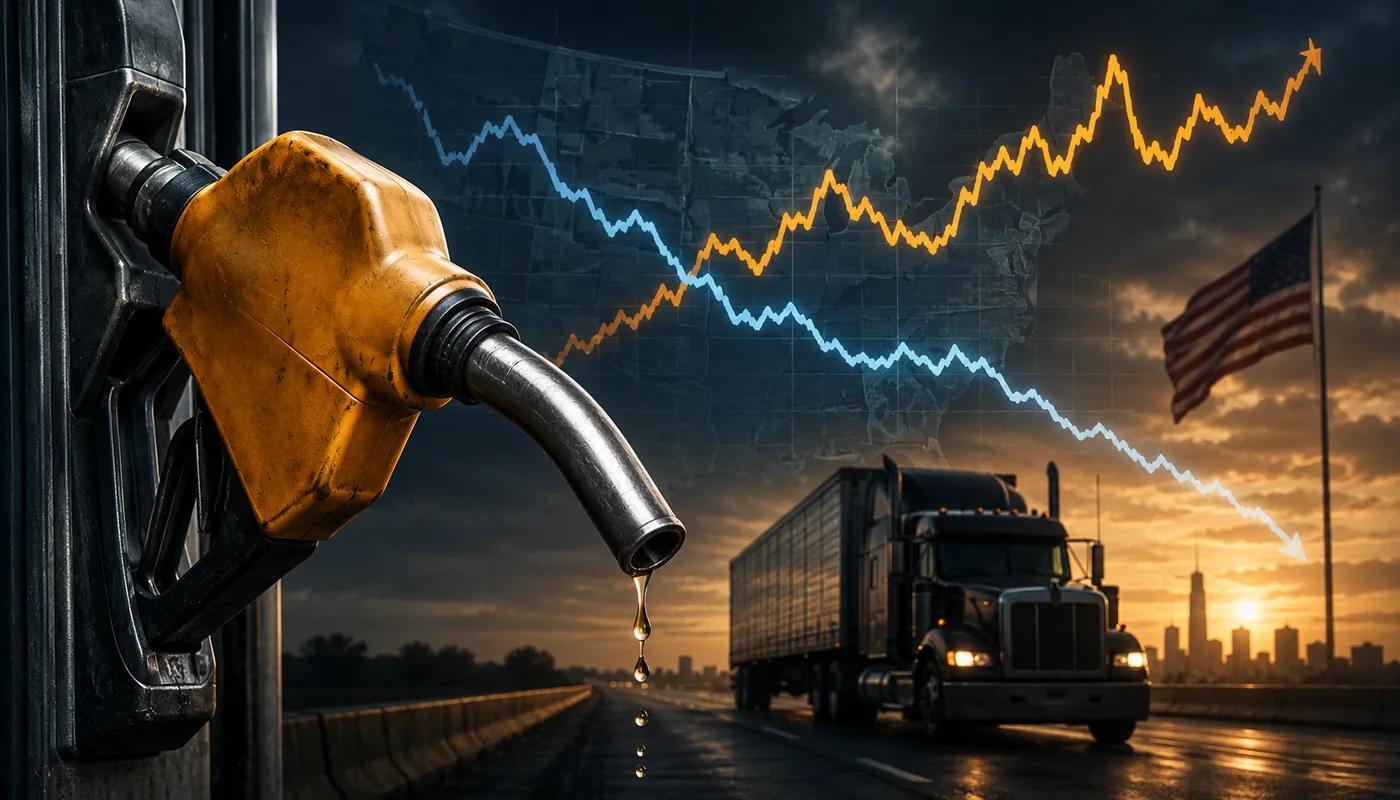
Fuel is cooling at U.S. pumps, but diesel, refining margins, and inflation data still make it a live business-cost risk.
Key takeaways
Fuel is now a margin signal, not just a pump-price headline.
- U.S. regular gasoline averaged $4.164 per gallon on June 8, 2026, down from $4.322 a week earlier; diesel was $5.318, according to AAA Fuel Prices.
- EIA’s latest weekly survey put regular gasoline at $4.305 per gallon and on-highway diesel at $5.350 on June 1, both down about $0.17 from the prior week, according to EIA’s Gasoline and Diesel Fuel Update.
- U.S. commercial crude inventories fell 8.0 million barrels to 433.7 million barrels for the week ending May 29, while refinery utilization reached 94.7%, according to EIA’s Weekly Petroleum Status Report overview.
- Gasoline CPI rose 28.4% year over year in April 2026, so the useful business rule is the 3-P fuel test: pump, pipeline, and pass-through must improve together, according to the BLS Consumer Price Index Summary.
Fuel in U.S. Business & Finance means the liquid-energy chain that prices consumer driving, freight, construction, farming, airlines, and inflation-sensitive goods. Diesel engines move trucks, trains, boats, barges, farm equipment, and construction gear, which is why fuel quickly becomes a margin story, not just a household expense, according to EIA’s diesel fuel explainer.
The tension is simple: fuel is falling and still expensive. AAA’s regular gasoline average fell 15.8 cents over the week to June 8, but diesel remained $1.811 per gallon above its year-earlier reading, based on AAA Fuel Prices. The 3-P fuel test separates genuine relief from a cheaper-looking sign at the corner station.
Why is fuel trending in U.S. Business & Finance?
Fuel is trending because the market is giving two signals at once: consumer gasoline is improving, but business fuel exposure remains high.
AAA said on June 4 that regular gasoline had fallen 18 cents in a week to $4.24, marking a second straight weekly decline as crude remained below $100 per barrel, according to AAA’s weekly gas update. By June 8, AAA’s daily table showed regular gasoline at $4.164 and diesel at $5.318 per gallon, according to AAA Fuel Prices.
The hidden signal is diesel. EIA says diesel engines help move trucks, trains, boats, barges, buses, farm equipment, and construction machinery, so diesel prices flow through freight invoices and bids before many consumers notice, according to EIA’s diesel fuel explainer.
What changed in fuel prices as of June 8, 2026?
The latest fuel-price change is a split signal: retail gasoline cooled, while diesel and regional spreads stayed uncomfortable.
As of June 8, 2026: AAA put regular gasoline at $4.164 per gallon, down from $4.322 one week earlier and up from $3.126 one year earlier; diesel was $5.318, down from $5.448 one week earlier and up from $3.507 one year earlier, according to AAA Fuel Prices.
EIA’s June 1 weekly data showed why location still matters. West Coast regular gasoline averaged $5.500 per gallon, Gulf Coast gasoline averaged $3.804, California gasoline averaged $5.853, and Texas gasoline averaged $3.752, according to EIA’s Gasoline and Diesel Fuel Update. That gap is real money for distributors, delivery-heavy retailers, and regional carriers.
Which fuel number should businesses watch first?
Businesses should watch pump, pipeline, and pass-through together because no single fuel price captures cost risk.
| Signal | Latest reading | Business use |
|---|---|---|
| Pump | Regular gasoline was $4.164 per gallon and diesel was $5.318 on June 8, according to AAA Fuel Prices. | Measures consumer and fleet cash pressure. |
| Pipeline | Commercial crude stocks were 433.7 million barrels after an 8.0 million-barrel draw, gasoline stocks were 215.0 million barrels after a 3.4 million-barrel build, and refinery utilization was 94.7%, according to EIA’s WPSR overview. | Shows whether pump relief has supply support. |
| Pass-through | Gasoline CPI rose 5.4% month over month and 28.4% year over year in April, while fuel oil rose 5.8% for the month, according to BLS. | Shows whether energy is still feeding inflation. |
| Forecast | EIA’s May 12 STEO forecast Brent around $106 per barrel in May and June and projected U.S. regular gasoline at $3.88 per gallon in 2026, according to EIA. | Sets the budget baseline. |
The decision rule is blunt: call fuel risk lower only when all three Ps improve. Today, the pump signal is better, the pipeline signal is mixed, and pass-through is still visible in inflation data.
Why can gasoline fall while diesel still hurts margins?
Gasoline can fall while diesel still hurts margins because the two fuels share crude oil but differ in refining exposure, demand use, and business pass-through.
EIA’s March 2026 breakdown showed crude oil accounted for 57% of a gallon of regular gasoline, refining 21%, taxes 14%, and distribution and marketing 8%, according to EIA’s Gasoline and Diesel Fuel Update. For diesel, crude oil accounted for 42%, refining 34%, taxes 12%, and distribution and marketing 12%, according to the same EIA update.
That 34% refining share is the overlooked line item. EIA put U.S. refinery utilization at 94.7% for the week ending May 29, with Gulf Coast utilization at 98.1%, according to EIA’s WPSR overview. The myth to correct: cheaper gasoline is not the same as cheaper logistics.
What could move U.S. fuel prices next?
U.S. fuel prices will move next on crude supply risk, refinery utilization, inventory rebuilds, and whether demand finally bends.
EIA’s latest Short-Term Energy Outlook, released May 12, assumed the Strait of Hormuz remained effectively closed until late May, with shipping traffic beginning to pick up in June, according to EIA. The same forecast expected global oil inventories to fall by 8.5 million barrels per day in the second quarter of 2026, keeping Brent around $106 per barrel in May and June, according to EIA.
Demand has not disappeared. For the week ending May 29, EIA reported total products supplied at 20.333 million barrels per day, and the four-week average was 20.404 million barrels per day, up 3.0% from the year-earlier four-week period, according to EIA’s WPSR overview. The quarter looks safer only when gasoline, diesel, and CPI energy soften together.
FAQ
Fuel FAQs answer the core U.S. business questions about pump prices, diesel risk, and inflation pass-through.
What does fuel mean in U.S. Business & Finance?
Fuel means the gasoline, diesel, jet fuel, and crude-derived products that move households, freight, airlines, and inflation-sensitive costs in the United States.
Why is fuel trending now?
Fuel is trending because U.S. gasoline prices are easing while diesel, inventories, and inflation data still point to elevated business-cost risk.
Is diesel more important than gasoline for businesses?
Diesel is often the sharper business signal because it powers freight, construction, farming, buses, trains, boats, barges, and backup generators.
What is the 3-P fuel test?
The 3-P fuel test says fuel risk is lower only when pump prices, pipeline supply, and price pass-through improve together.
What should companies watch next?
Companies should watch diesel prices, refinery utilization, commercial crude inventories, product supplied, and EIA short-term energy forecasts.
Sources
These sources are the primary references used for prices, inventories, forecasts, diesel use, and inflation.
- AAA Fuel Prices — American Automobile Association, 2026-06-08.
- National Gas Average Drops Nearly 20 Cents in One Week — American Automobile Association, 2026-06-04.
- Gasoline and Diesel Fuel Update — U.S. Energy Information Administration, 2026-06-02.
- Weekly Petroleum Status Report overview — U.S. Energy Information Administration, 2026-06-03.
- Short-Term Energy Outlook — U.S. Energy Information Administration, 2026-05-12.
- Consumer Price Index Summary — U.S. Bureau of Labor Statistics, 2026-05-12.
- Diesel fuel explained: Use of diesel — U.S. Energy Information Administration, 2023-09-14.