Superyacht Market in the United States: Growth, Wealth, and New Business Dynamics
The U.S. superyacht market is expanding with rising sales, more sophisticated buyers, and strategic business investments in brokerage and services.
The United States remains a central hub for the global superyacht market, with demand driven by ultra‑high‑net‑worth individuals and evolving business models in brokerage, management, and ancillary services. This expansion reflects broader wealth trends even as economic conditions shift. Data from sector analysts and market research show the superyacht segment commanding a significant share of the domestic recreational boat market and attracting strategic investment in service firms. Meanwhile, industry valuations and orders hint at a broader global uptrend that the U.S. is well positioned to navigate. (Grand View Research)
Key takeaways
- Superyacht revenue share leads the U.S. yacht market, with the segment accounting for the largest portion (about 31%) of total U.S. yacht market revenue in 2025. (Grand View Research)
- Global context: a multibillion‑dollar business, with the broader superyacht market estimated at around $13.8 billion, driven by more and pricier vessels. (Barron's)
- U.S. buyers are increasingly informed and strategic, seeking well‑priced pedigree yachts and valuing data‑driven guidance. (SYT)
- Marine services are diversifying, with established retailers like MarineMax reporting growth in high‑margin superyacht services despite broader sales challenges. (Stock Titan)
- Industry consolidation is underway, exemplified by Ancient’s acquisition of Burgess, signaling confidence in brokerage and management as core profit centers. (Boating Industry)
What is a superyacht and why it matters to U.S. business
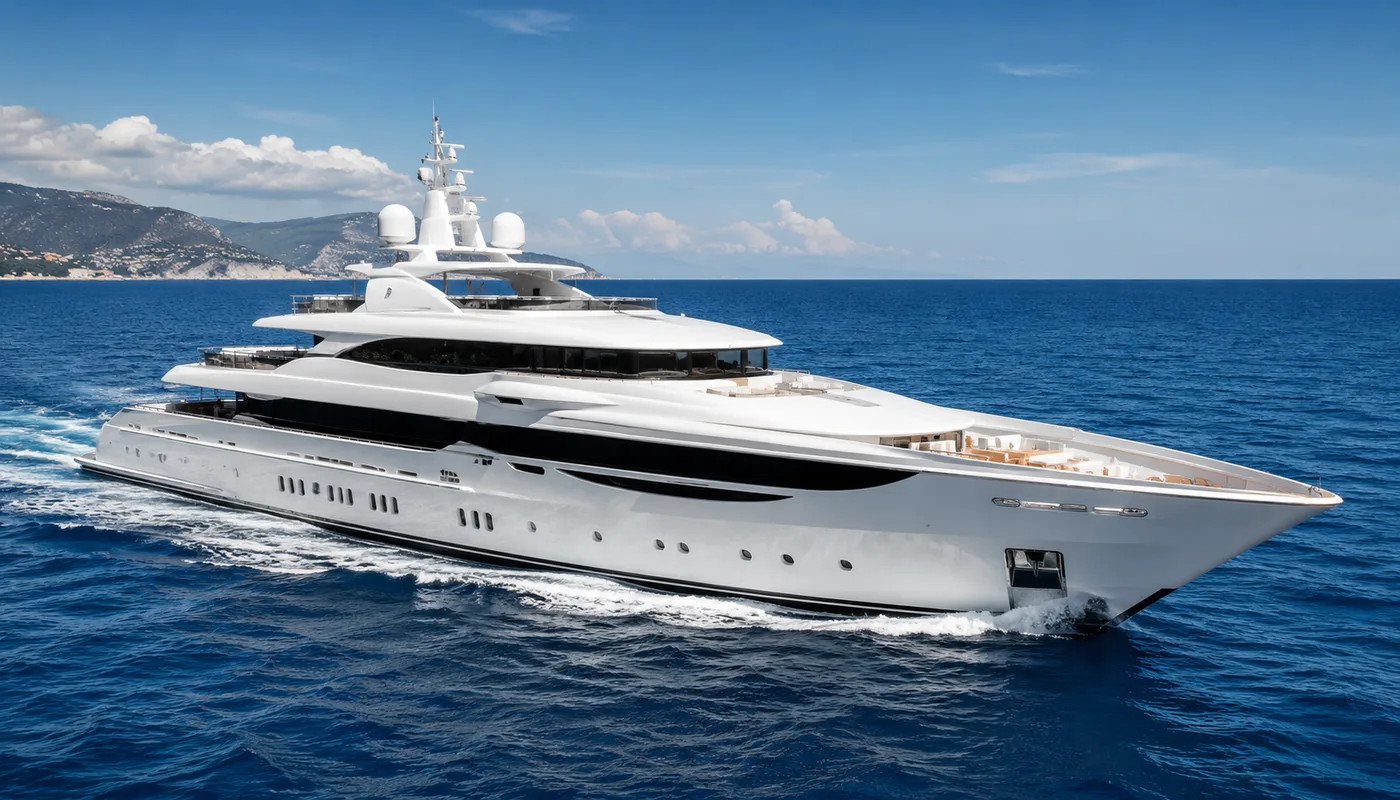
A superyacht is generally defined as a luxury yacht above 24 meters (about 79 feet) in length, custom‑built or semi‑custom and outfitted for private ownership or charter with premium amenities. They differ from smaller recreational boats in scale, cost, operation complexity, and business ecosystem. Superyachts often involve bespoke design and extended build lead times that sustain shipyard, designer, and supplier networks globally. (Industry definitions and measurement conventions vary but this threshold is widely used in market reporting.)
In the U.S. context, superyachts matter to business because they touch multiple sectors: manufacturing and design, high‑end brokerage and management services, marinas, financial services (including insurance and specialized financing), and luxury tourism (charter markets). The size of the luxury segment makes it relevant for wealth managers, private banks, and specialized lenders, not just marine firms.
How big is the U.S. superyacht segment now?
Superyachts represent the largest revenue share within the U.S. yacht market, according to industry data, commanding around 31.29% of total yacht market revenue in 2025. This underscores the disproportionate influence of large vessels on industry economics, even though they represent a small fraction of unit sales. (Grand View Research)
Globally, superyachts have grown into a multibillion‑dollar business, with recent estimates placing total market size around $13.8 billion and a trend toward larger, more expensive vessels. This growth is tied to both new builds and the rising value of pre‑owned sales. (Barron's)
U.S. buyer evolution: sophistication over spectacle
The profile of the U.S. superyacht buyer is evolving, with sophistication and data use replacing simple showmanship. Industry experts like Barrett Wright of Hill Robinson and Alastair Callender of Moravia Yachting note that today’s ultra‑high‑net‑worth (UHNW) buyers are well prepared, expect transparent, data‑driven guidance, and act quickly when opportunities arise. (SYT)
This shift reflects broader wealth dynamics. Wright points to a major generational wealth transfer — an estimated $60 trillion changing hands over the next decade — a factor that sustains demand even amid macroeconomic uncertainty. (SYT)
Americans increasingly view superyachts not simply as status symbols but as platforms for experience and time with family. That change in mindset influences how brokers and service providers position offerings. (SYT)
Business dynamics: new models beyond sales
The economics around superyachts are more complex than purchase prices, often involving significant services and ongoing support. Firms that can offer holistic ownership solutions — management, maintenance, crew services, charter support, and financial planning — are gaining strategic importance.
MarineMax’s diversified approach
MarineMax, the largest recreational boat and yacht retailer in the U.S., reported $527.4 million in revenue for Q2 fiscal 2026. While new and used boat sales declined 15% year‑over‑year, the company highlighted growth in superyacht services, marinas, finance, and insurance as stabilizing forces for margins. (Stock Titan)
This diversification aligns with broader industry shifts: services and recurring revenue streams can smooth cyclical sales swings, especially when new yacht deliveries face long build times and economic headwinds.
Consolidation and strategic investment
Industry consolidation reflects confidence in high‑end marine services. In late 2025, Ancient completed its acquisition of Burgess, a global superyacht brokerage and management firm with offices spanning New York, Miami, London, and beyond. This move signals investor belief in premium brokerage and management as enduring growth pillars rather than one‑off transaction businesses. (Boating Industry)
Friction: cost of ownership and market limits
While the market expands at the high end, owning and operating a superyacht is capital‑intensive. Beyond purchase price, annual running costs can be large — industry rules of thumb suggest operating expenses around 8–10% of the yacht’s value per year, encompassing crew salaries, maintenance, fuel, and dockage. (This cost rule appears widely referenced in industry discussions, though precise numbers vary by vessel and usage patterns.) (Reddit)
These ongoing costs create friction for aspiring owners and underscore why many UHNW buyers rely on professional management and budgeting expertise to protect asset value over time. This includes transparent forecasting of refits, crew planning, and complex operational requirements, a trend experts say is elevating the role of specialist services. (SYT)
What’s next for the U.S. superyacht market?
Looking ahead, several themes are likely to shape the U.S. superyacht landscape in 2026 and beyond:
- Continued buyer sophistication, with data and transparency replacing salesmanship. (SYT)
- Services as strategic anchors, with management, brokerage, and financing becoming core revenue sources. (Boating Industry)
- Market resilience, sustained by long‑term wealth trends despite broader economic uncertainty. (Barron's)
For business and finance stakeholders, the challenge is not just tracking yacht orders but understanding how wealth behavior, service innovation, and industry consolidation converge to shape future growth.
FAQ
What defines a superyacht and its market?
A superyacht is a privately owned luxury vessel typically over 24 meters in length, whose market involves new builds, brokerage sales, charters, and related services driven by ultra‑high‑net‑worth demand.
How significant is the U.S. in the global superyacht industry?
The United States remains a dominant force in superyacht transactions, especially in brokerage and secondary market activity, driven by affluent, data‑driven buyers.
What business trends are shaping superyacht services in 2026?
Strategic investments in superyacht brokerage and management services, rising demand for transparency, and diversified revenue streams like finance and insurance are reshaping the sector.
Sources
- Grand View Research, “The United States Yacht Market Size & Outlook, 2033”, accessed 2026.
- Barron’s, “SuperYachts Are Going Through a Growth Phase: More, Bigger, and Pricier”, May 2026.
- SuperYacht Times, “Barrett Wright and Alastair Callender on the state of the US yacht market in 2026”, April 2026.
- StockTitan via Business Wire, “MarineMax Q2 revenue $527M, reaffirms 2026 outlook”, May 2026.
- Boating Industry, “Ancient finalizes acquisition of Burgess”, November 2025.